
Charged Raindrops May Wear Down Metal Over Time
Scientists found that some raindrops can pick up tiny electric charges and slowly damage coated metals.
Print it — all four files
The student packet has no answers in it. The teacher copy is the same pages plus a note on each question and the answer keys. Both languages carry the same story, the same picture and the same vocabulary.
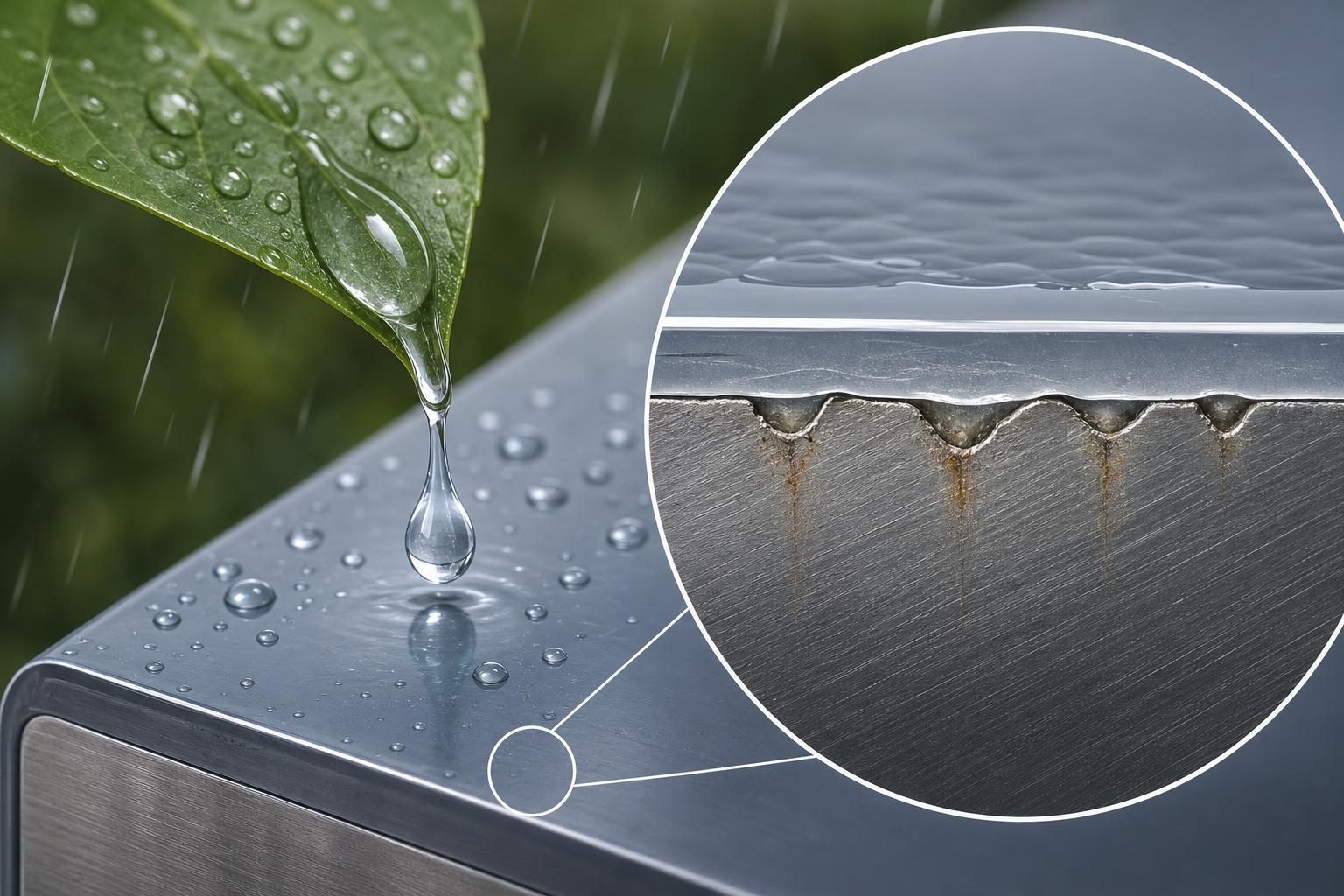
Scientists have found that some raindrops may slowly damage metal, according to Science News Explores. The drops are not special because they are wet. They are special because they carry an electric charge, a tiny buildup of electricity.
That charge can happen when water slides across another surface. A drop can run down a leaf, a window, or a building wall. As it slides, it may pick up charge. When the charged drop later lands on metal, it can pass some charge along. Over time, that can corrode the metal, which means it eats away at it.
This matters because rain lands on many things people build. Cars, bridges, monuments, ships, and machines all sit outside. People often cover metal with a protective coating, like a raincoat for a surface. The new tests show that charged water drops can get through some coatings.
Physicist Zhongyuan Ni and his team studied this in a lab. A physicist is a scientist who studies matter and energy. At first, Ni saw no damage when water drops hit copper. Copper is a metal that resists damage better than many others. Then one test kept running longer. Later, the copper looked different.
The team tested the idea more carefully. They dropped water onto copper covered with Teflon. Teflon is a smooth protective coating. Some drops were given charge by sliding over leaves or construction materials. Other drops were not charged. They were tipped straight onto the coated copper.
Under a microscope, a tool that makes tiny things look larger, the difference showed up. The charged drops had damaged the surface. They had eaten through the Teflon and started corroding the copper underneath. The uncharged drops did not cause the same damage.
The team also tested copper and gold covered with another coating called polystyrene glass. Charged drops damaged those samples too. That suggests the effect is not just about one metal or one coating.
The finding does not mean a rainy walk is dangerous. Ni said the effects are small. But small effects can add up over years. Think about a playground slide, a bike left outdoors, or a bridge crossed every day. Tiny changes can matter when they happen thousands of times.
The discovery may help engineers, people who design and build things, make better coatings. It also shows that familiar things can still surprise scientists. A raindrop sliding down a leaf may be part of a much bigger story.
Written from reporting by Science News Explores, “Sliding down surfaces can make rainwater corrosive”.
Discussion questions
- Should cities spend more money now on stronger coatings for bridges and monuments, or wait for more research? Defend your choice.
- Why might a small effect, like charged raindrops, be important even if it does not cause big damage right away?
- What would you want scientists to test next before engineers change how they protect outdoor metal?