
Rare Wooden Tomb Shows a Town’s Long-Ago Importance
A 1,000-year-old burial in Russia gives archaeologists new clues about animals, travel, and power in the Middle Ages.
Print it — all four files
The student packet has no answers in it. The teacher copy is the same pages plus a note on each question and the answer keys. Both languages carry the same story, the same picture and the same vocabulary.
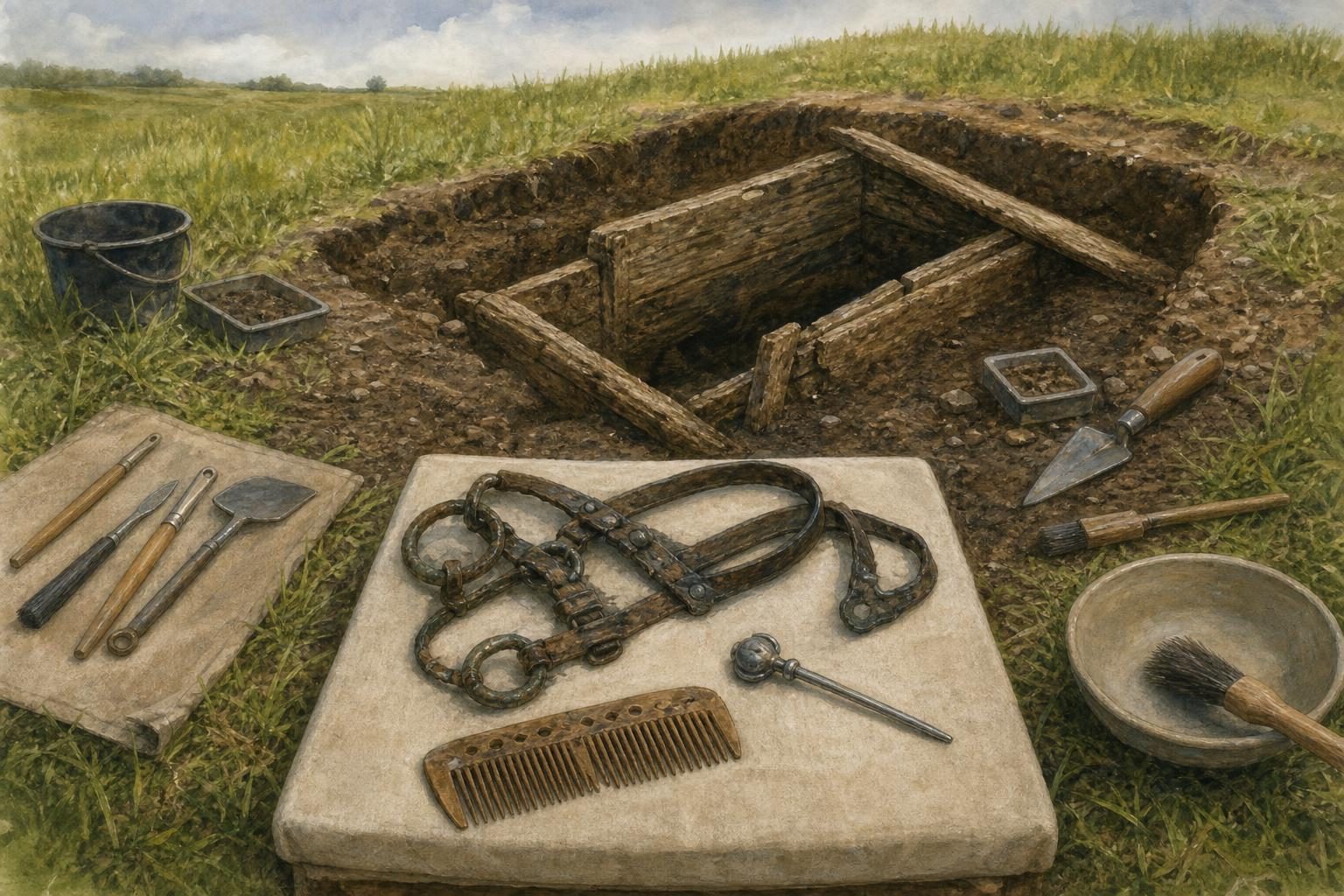
Archaeologists, scientists who study old human places and objects, found a rare wooden tomb in Suzdal, Russia, this summer. According to Live Science, the tomb held the remains of a man, a horse, and a dog. The burial is about 1,000 years old.
The tomb was in a medieval cemetery at Gnezdilovo, an archaeological site near Suzdal. Medieval means from the Middle Ages, long after ancient Rome and before modern times. The find was unexpected. The wooden chamber was about 3.3 feet underground. It was roughly the size of a small bedroom corner, about 10 by 9 feet.
The wooden roof had fallen in over time. Still, the chamber was well preserved. That means enough of it stayed safe for scientists to study. The man was about 25 to 35 years old when he died. Archaeologists also found an iron knife, stirrups, riding gear, a bone comb, and a battle ax. A silver brooch, which is a pin for clothing, was near his neck.
These objects tell a story. They suggest the man had high status. High status means he was important in his community. The horse and riding gear also show that riding mattered in his life. The dog may show that animals had meaning, too. Archaeologists do not only look for treasure. They look for clues about how people lived.
The team found 15 burials at Suzdal this summer. Some were simple pits in the ground. Some had mounds of dirt over them. Other burials held rings, necklaces, weapons, or riding equipment. Differences like these help archaeologists compare people in one place.
The tomb matters because of where it was found. Most tombs like this have been found in large old city centers. This one was found at Suzdal. That may mean Suzdal was more important 1,000 years ago than experts knew before.
At that time, the area was part of the Kievan Rus’. This was a group of lands and settlements. Baltic, eastern Slavic, and Norse peoples lived there. Some noble families used burial customs that came from Scandinavia, in northern Europe. A custom is a way people often do something.
For a class today, the find is like opening a time capsule. It was not made for us, but it still sends clues forward. Each object helps scientists ask better questions about life long ago.
Written from reporting by Live Science, “Archaeologists unearth a medieval nobleman buried with his horse and dog in a rare wooden tomb in Russia”.
Discussion questions
- Which objects from the tomb seem like the strongest clues about this person’s life, and why?
- Should archaeologists study burials even though they were personal places for families long ago? Defend your view.
- If a future archaeologist found your classroom, what objects might confuse them, and what might they learn correctly?