
Tiny Antarctic Base Gets a Big Repair Job
Eight workers will spend five months fixing an old base on an island shared with penguins.
Print it — all four files
The student packet has no answers in it. The teacher copy is the same pages plus a note on each question and the answer keys. Both languages carry the same story, the same picture and the same vocabulary.
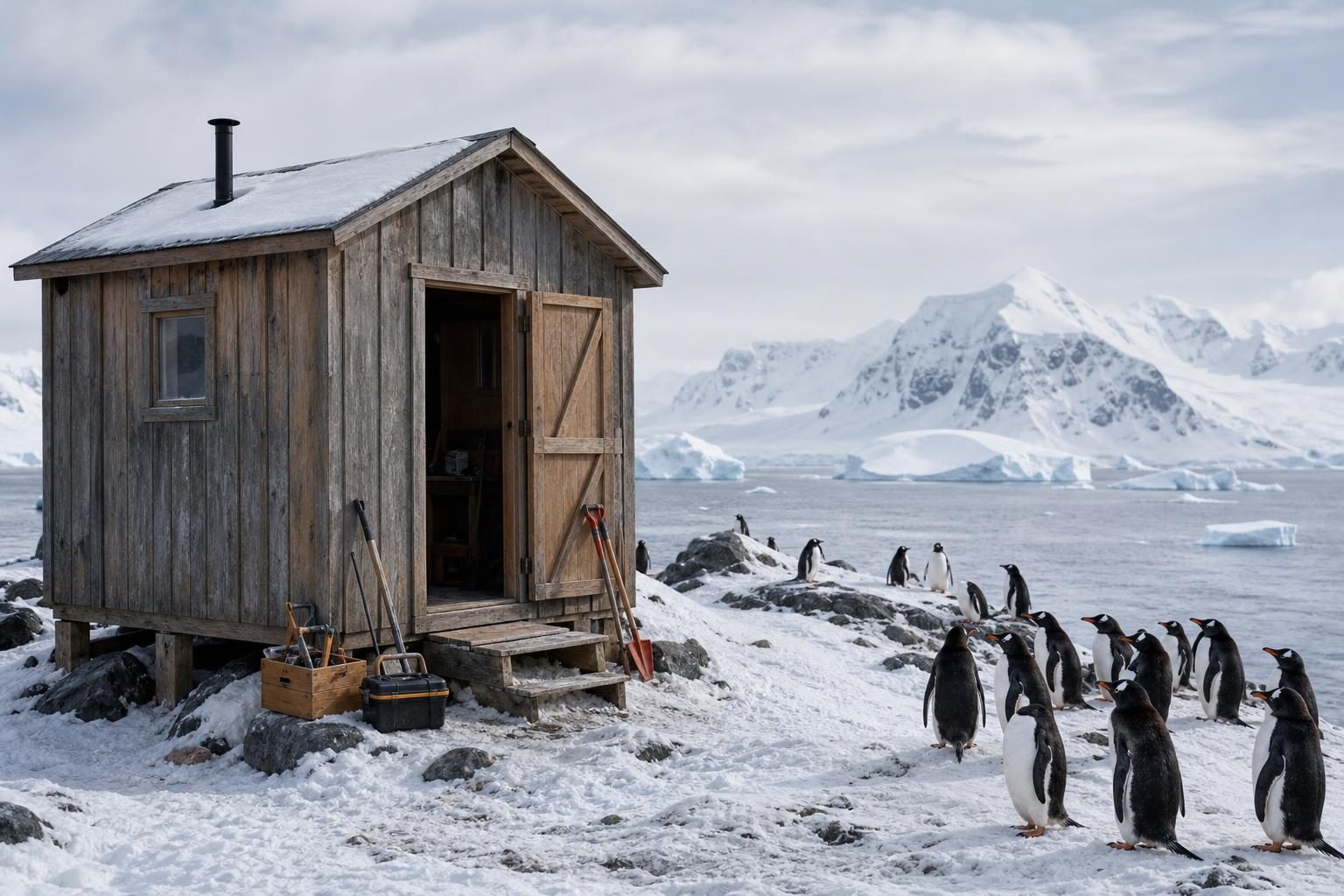
An eight-person team will spend five months repairing an old British base in Antarctica, according to BBC Newsround. The group includes a carpenter, a mountain rescue volunteer, and a postal worker. Their job is to keep Base A standing, while living in one bunk room with no running water or flushing toilets.
The base is more than 80 years old. It was first built in February 1944 as part of a secret British government operation. Later, it became a place where scientists worked. Now it is a historic site, a place saved because it helps tell the past.
This is the second year of a three-year repair project. The UK Antarctic Heritage Trust says age and the environment have damaged the base. There has been more rainfall, more water flow, and heavy snow pressing on the buildings. The trust says climate change, long-term shifts in weather and temperature, is adding to the challenge.
The team’s home will be Goudier Island. The island is about the size of a football field. About a thousand Gentoo penguins live there too. That means the workers must fix buildings and also avoid bothering their noisy neighbors.
One person will run what the trust calls the world’s southernmost post office. That means mail can still leave from one of the farthest places people work. It is a reminder that even a tiny base can connect to the rest of the world.
Before going, the team trains for emergencies. They learn first aid, which means helping an injured or sick person. They take a sea survival course. They also learn about penguins, because sharing space with wild animals takes care.
This kind of repair is called conservation. Conservation means protecting something important without turning it into something new. One worker told BBC Newsround that these buildings were not meant to last for decades. The challenge is to keep them standing, while keeping their story.
The team will also visit Wordie House, another Antarctic base. It holds the only continuous climate record there since the 1940s. A continuous record means measurements kept without big breaks. Those records help show how the area has changed over time.
Inside Wordie House, many objects are still where earlier visitors left them. An artifact is an object from the past. Recording each one helps people understand what daily life was like there.
For five months, the team will have few comforts. The trust says chocolate, packet soup, and mini-watercolor sets will help pass the time. Their work is part repair job, part history lesson, and part careful living beside penguins.
Written from reporting by BBC Newsround, “Race against time to save Antarctic base”.
Discussion questions
- Should people spend time and money saving old buildings in very faraway places? Why or why not?
- How should the team decide what to fix first when both the buildings and the penguins need care?
- Why might objects left in their original place teach something different from objects moved to a museum?