
Free activities › Middle school
2026 Science Nobels Honor New Ways to See the Unseen
This year’s prizes celebrate tools for studying brain cells, ghostly space particles, and molecules with a “handed” shape.
Print it — all four files
The student packet has no answers in it. The teacher copy is the same pages plus a note on each question and the answer keys. Both languages carry the same story, the same picture and the same vocabulary.
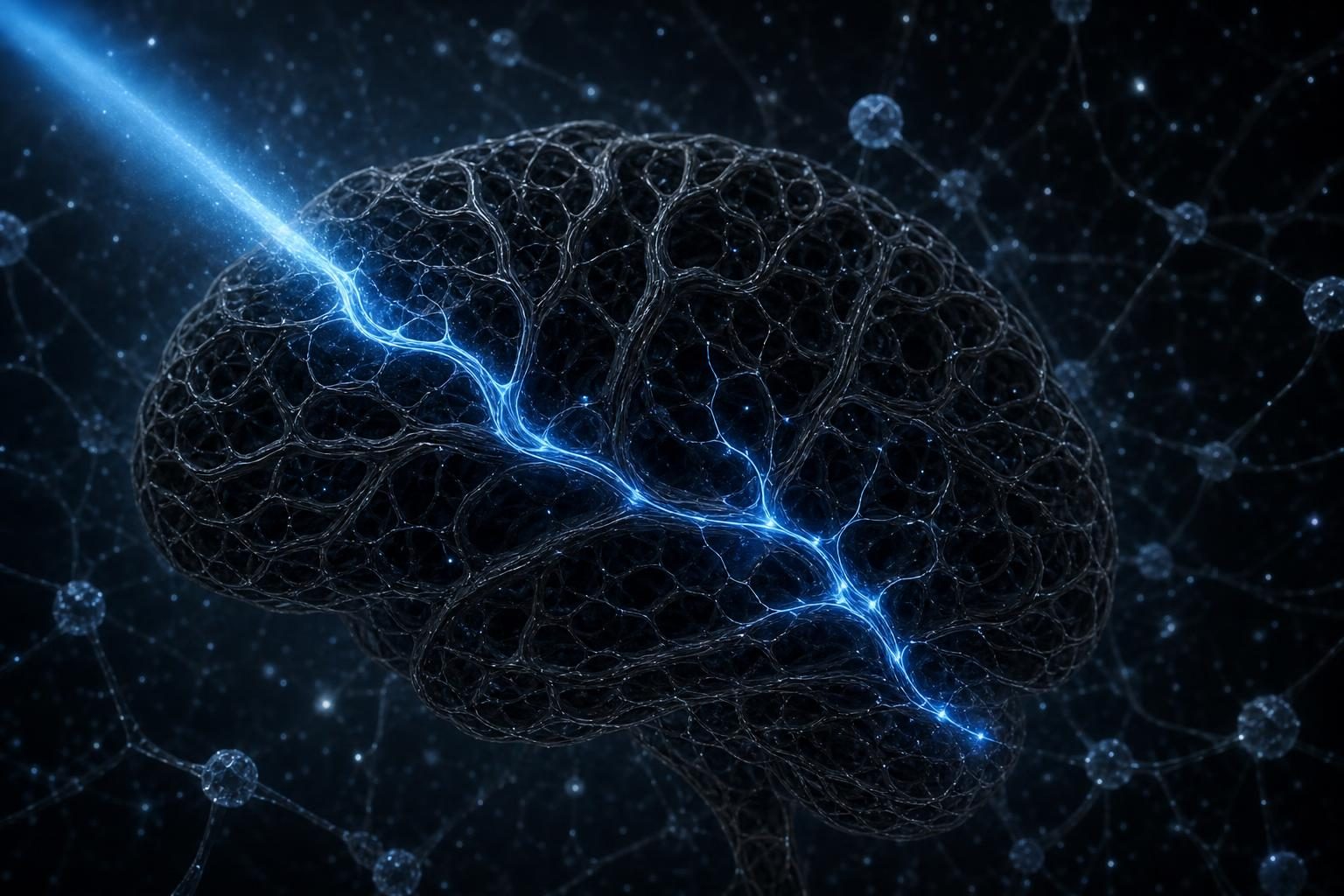
The 2026 science Nobel Prizes honored three breakthroughs that help scientists study things too tiny, too fast, or too hidden to understand before. According to Science News Explores, this year’s prizes went to work on a light-controlled tool for the brain, a giant ice-based detector for space particles, and a chemistry method for making certain “handed” molecules, which are molecules shaped like left and right hands.
The Nobel Prizes are yearly awards for major work in science and other fields. They matter because they do more than praise famous scientists. They point to ideas and tools that changed what researchers can ask next. This year’s awards show that discovery is often not just about finding an answer. It is also about building a better way to look.
The medicine prize went to Peter Hegemann, Georg Nagel and Karl Deisseroth for work that helped create optogenetics. Optogenetics is a method that uses light to turn certain nerve cells on or off. Nerve cells, also called neurons, are the cells that send messages in the brain and body. The human brain has nearly 90 billion neurons and about 100 trillion connections among them, so studying one pathway at a time is a huge challenge.
The story began with a single-celled green alga, a tiny plantlike organism that lives in water. Hegemann and Nagel studied a protein in the alga’s eye spot. A protein is a molecule that does a job inside a living thing. When light hit this protein, called channelrhodopsin, it made an electrical impulse. That happened because the protein opened like a pore and let positively charged ions, or charged atoms, move into the cell.
Deisseroth and a research team then tested whether the same light switch could work in nerve cells. They put the gene, or instruction code, for channelrhodopsin into rat nerve cells growing in dishes. When light shone on the cells, the cells reacted right away. Later, researchers put the gene into nerve cells in living mice and used optical fibers, thin strands that carry light, to shine blue light into the brain. The light could control the movement of the mice’s whiskers.
That may sound strange, but it gave scientists a powerful way to connect brain circuits with behavior. A circuit is a path that signals follow. Science News Explores reports that optogenetics helped scientists study healthy brains and brain problems. It may also help researchers work on conditions such as blindness, depression and dementia, a disease that harms memory and thinking. Soon after the Nobel announcement, other researchers reported that an optogenetics-based light therapy improved light sensitivity in seven of 10 people with retinitis pigmentosa, a disease that slowly destroys light-sensing cells in the retina, the part of the eye that detects light.
The physics prize honored work on IceCube, a huge neutrino observatory at the South Pole. A neutrino is a subatomic particle, meaning it is smaller than an atom. Neutrinos have no electric charge and almost never bump into matter. Billions pass through each person every second. Most come from fusion reactions in the sun, where small atomic nuclei join and release energy. Others come from far beyond our solar system.
Francis Halzen helped turn Antarctic ice into a detector. IceCube uses thousands of sensors buried in a cubic kilometer of ice. Scientists look for tiny flashes made when a neutrino rarely collides with an atomic nucleus. Because neutrinos are not bent by magnetic fields, their paths can point back toward distant sources in space.
Together, these prizes connect to what middle school science already studies: cells, energy, matter, waves, space and evidence. They also show that science advances when someone finds a new way to measure what could not be measured before.
Written from reporting by Science News Explores, “And the science Nobels for 2026 go to …”.
Discussion questions
- Which Nobel-winning tool seems more likely to change everyday life first: optogenetics in biology or IceCube’s neutrino detector in physics? Defend your choice.
- Should science prizes mostly reward useful inventions, or should they also reward tools that answer questions with no immediate practical use?
- What risks or limits should scientists think about when a tool can control living cells with great precision?