
Free activities › Middle school
A Lake Gets Two Names on Google Maps
U.S. users now see Lake America, while Canadian users still see Lake Ontario.
Print it — all four files
The student packet has no answers in it. The teacher copy is the same pages plus a note on each question and the answer keys. Both languages carry the same story, the same picture and the same vocabulary.
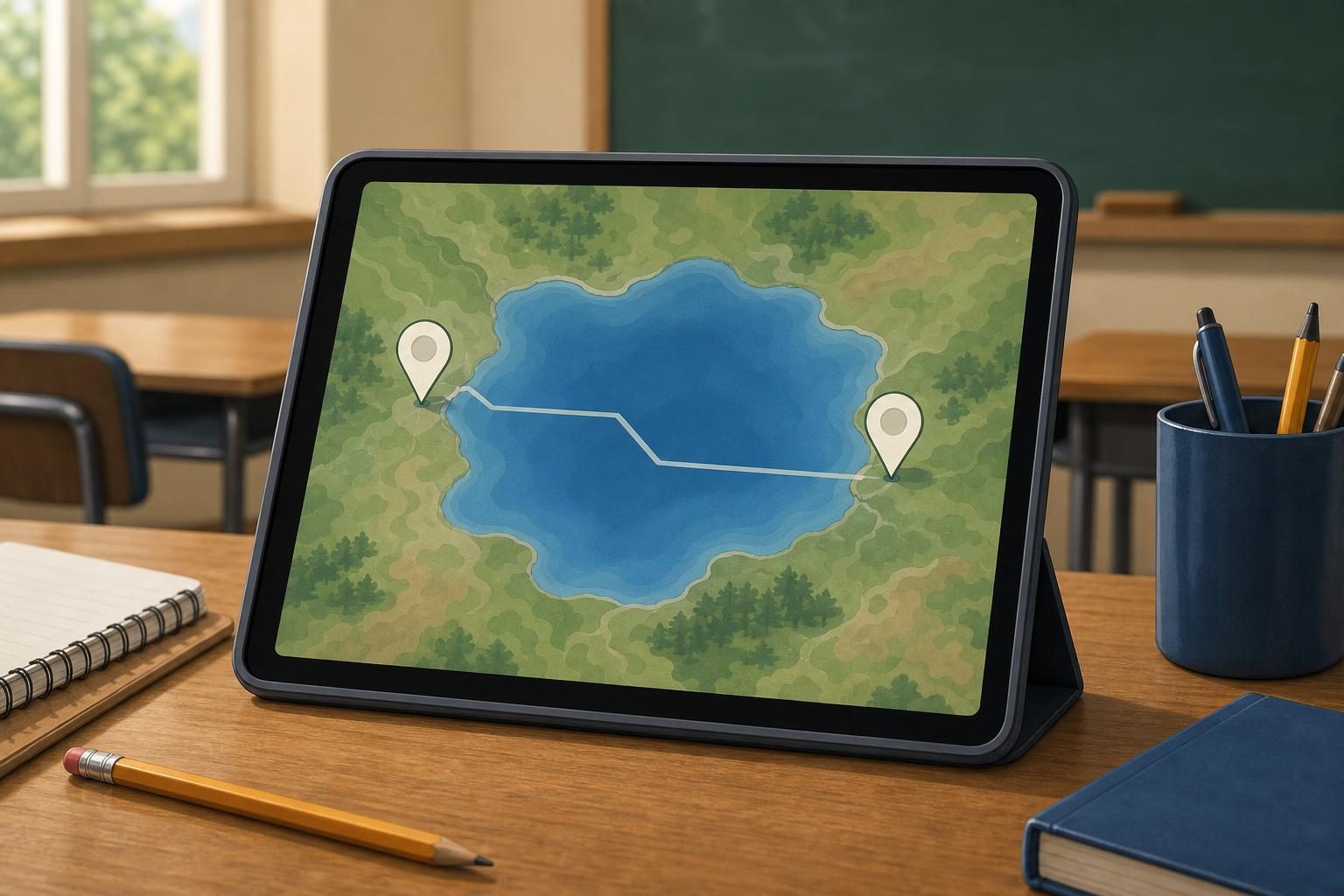
Google has changed what many people in the United States see when they search for Lake Ontario. For U.S. users, Google Maps now shows the lake as Lake America, according to reporting by PBS NewsHour. In Canada, Google says users will still see Lake Ontario. People outside the two countries will see both names.
The change follows an order from President Donald Trump on Thursday that renamed the lake in U.S. government records. Google said it used the name listed in the U.S. Geographic Names Information System, or GNIS. GNIS is a federal database that keeps official U.S. names for places such as rivers, mountains, and lakes. When that database changes, map companies may decide to match it.
This is not only about one label on one app. Maps are tools people use to get around, but they also teach us what places are called and who has power to name them. In social studies, maps can look final and factual, like a ruler or a calculator. But many maps are also choices. A border, a spelling, or a place name can show history, politics, and disagreements between countries.
Lake Ontario touches both the United States and Canada. The name Ontario is also the name of a Canadian province, which is one reason the change quickly became a Canadian issue too. PBS reported that the U.S. order came during a growing trade war with Canada. A trade war is a fight over buying and selling between countries, often using tariffs. Tariffs are taxes on goods that cross a border. The article says both countries have added billions of dollars in tariffs on each other’s goods.
Google said its approach is to show different names in different countries when governments use different official names for the same body of water. A body of water is a large water feature, such as a lake, gulf, or ocean area. The company did something similar in 2025 after Trump ordered the Gulf of Mexico renamed the Gulf of America in U.S. records. For people using Google Maps, this means the same place may appear with different names depending on where they open the app.
The reaction in Canada was not quiet. Doug Ford, the premier of Ontario, answered with a giant sign on the Canadian shore saying the lake’s older name would stay. A premier is the head of a provincial government in Canada, similar to a governor in a U.S. state. PBS said Trump’s order was met with mockery and indifference in both countries, meaning some people made fun of it while others acted as if it did not matter much.
For someone in middle school, this story matters because maps are part of everyday learning and everyday life. A class may use Google Maps for a geography project. A family may use it on a trip. A phone screen can make a name feel official, even when people across a border, or across a classroom, disagree. If two classmates see two different names for the same lake, both may be looking at a real map made by the same company.
The larger question is not whether one app can change a lake. The water did not move. The shoreline did not change. But names carry memory and power. They can honor a language, claim a place, or send a political message. This story shows that a map is not just a picture of the world. It is also a record of decisions made by governments, companies, and communities.
Written from reporting by PBS NewsHour, “Lake Ontario now called Lake America on Google Maps for U.S. users after Trump ordered name change”.
Discussion questions
- When a place has different official names in different countries, should a map app show the local government’s name, one shared name, or both? Defend your choice.
- How can a map be both a useful tool and a political message at the same time?
- What information would help you judge whether renaming a shared place is fair or unfair?