
Free activities › Middle school
Ancient Iron Bars Found in the Danube Reveal a Lost Trade Route
A huge find in an Austrian river shows how iron, trade, and transportation shaped life more than 2,000 years ago.
Print it — all four files
The student packet has no answers in it. The teacher copy is the same pages plus a note on each question and the answer keys. Both languages carry the same story, the same picture and the same vocabulary.
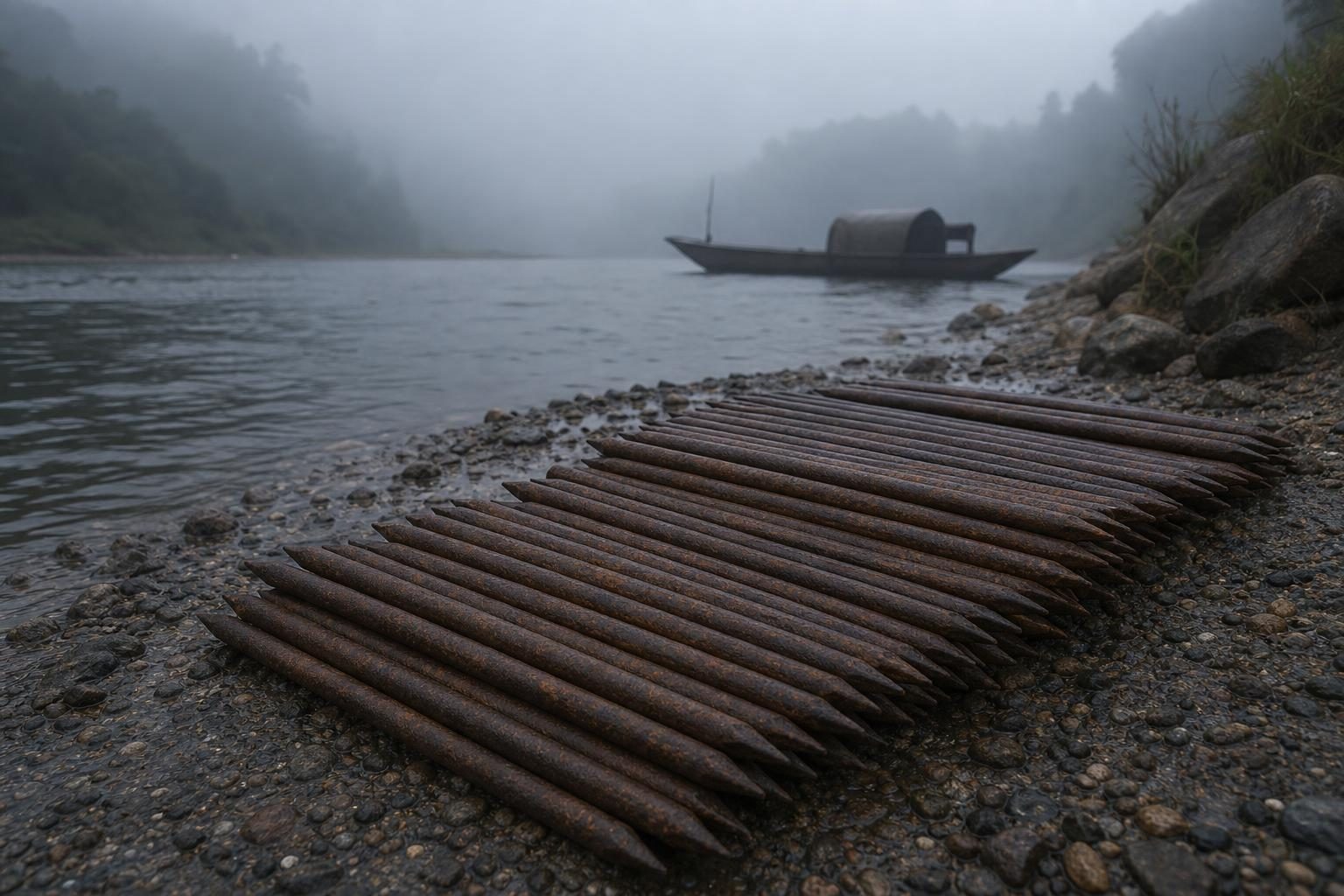
Workers pulling gravel from the Danube River in what is now Austria helped uncover a huge load of ancient iron: at least 500 bars that sank more than 2,000 years ago. According to Live Science, archaeologists, scientists who study the human past through objects people left behind, say it is the largest known find of ancient iron bars in Europe.
The bars were found near the village of Deinham. Workers first noticed strange double-pointed iron pieces in 2019 and reported them to Austria’s monument authority, the government office that protects important historic places and objects. Researchers Peter Trebsche of the University of Innsbruck and Marion Berranger of the University of Technology of Belfort-Montbéliard studied the find and published their results in Antiquity, a research journal.
The iron dates to the third to second centuries B.C., which means the years between 300 and 101 before year 1. That period was long before trucks or trains. Moving heavy goods often meant using rivers. The Danube was like a highway made of water. If the metal was cargo from a wrecked boat, it can tell historians how people made and traded valuable materials across central Europe.
The find is not a pile of finished swords, tools, or nails. The pieces are semifinished bars, meaning they were partly shaped but still needed more work. Archaeologists sometimes call such bars ingots, a word for metal shaped so it can be stored, traded, and later made into something else. A blacksmith, a craft worker who heats and hammers metal, could have turned the bars into many different objects.
Trebsche and Berranger identified 193 complete bars and 307 partial bars. The complete bars were about 11.2 inches long on average and weighed around 4.5 pounds each. Together, the collection weighed about 2,200 pounds, or 1 metric ton. Trebsche said the metal could have made about 500 swords or as many as 8,000 iron nails.
That is why a rusty river find matters. Iron was power. It could become weapons, farm tools, building parts, or fasteners that held wooden structures together. A large shipment shows that people in the Late Iron Age, the period when iron tools and weapons became common in many places, could produce and move a lot of metal at once. It also suggests organized trade. Someone had to make the bars, load them, ship them, and plan where they would go.
But the discovery also shows a problem archaeologists often face. The bars were recovered after gravel extraction with a large bucket excavator, a machine that scoops up river material. That destroyed the original context, meaning the exact position and surroundings of the objects. Context can answer questions such as whether the bars were packed together, scattered by a wreck, or placed in the river on purpose.
Because that context is gone, the researchers cannot be sure how the iron ended up underwater. They say a ritual deposit, an offering placed in a special spot for religious reasons, cannot be ruled out. Still, many river finds are thought to be cargo lost during transport. Similar bars have been found in Manching, Germany, about 125 miles away. The researchers think it is possible the Deinham bars were forged in Bavaria, the region around Manching.
The next clues may come from chemistry. Researchers are analyzing trace elements, tiny amounts of other substances mixed into the iron, to see whether the bars match ore from a particular place. That kind of evidence can turn a muddy pile of metal into a map of ancient work, travel, and exchange.
Written from reporting by Live Science, “'Nothing short of a minor miracle': 'Rusty treasure' found in the Danube is full of 2,000-year-old iron bars that could equip an entire army with weapons”.
Discussion questions
- When construction or mining work uncovers ancient objects, who should be responsible for protecting them, and what trade-offs does that create?
- Does this discovery seem to tell us more about war, trade, or technology? Choose one and defend your answer with evidence.
- How confident should archaeologists be when the original context of a find has been damaged or lost?