
Free activities › Middle school
The Food Scraps Scientists Say We Should Rethink
A new study says peels, stalks and rinds often hold fiber many people miss.
Print it — all four files
The student packet has no answers in it. The teacher copy is the same pages plus a note on each question and the answer keys. Both languages carry the same story, the same picture and the same vocabulary.
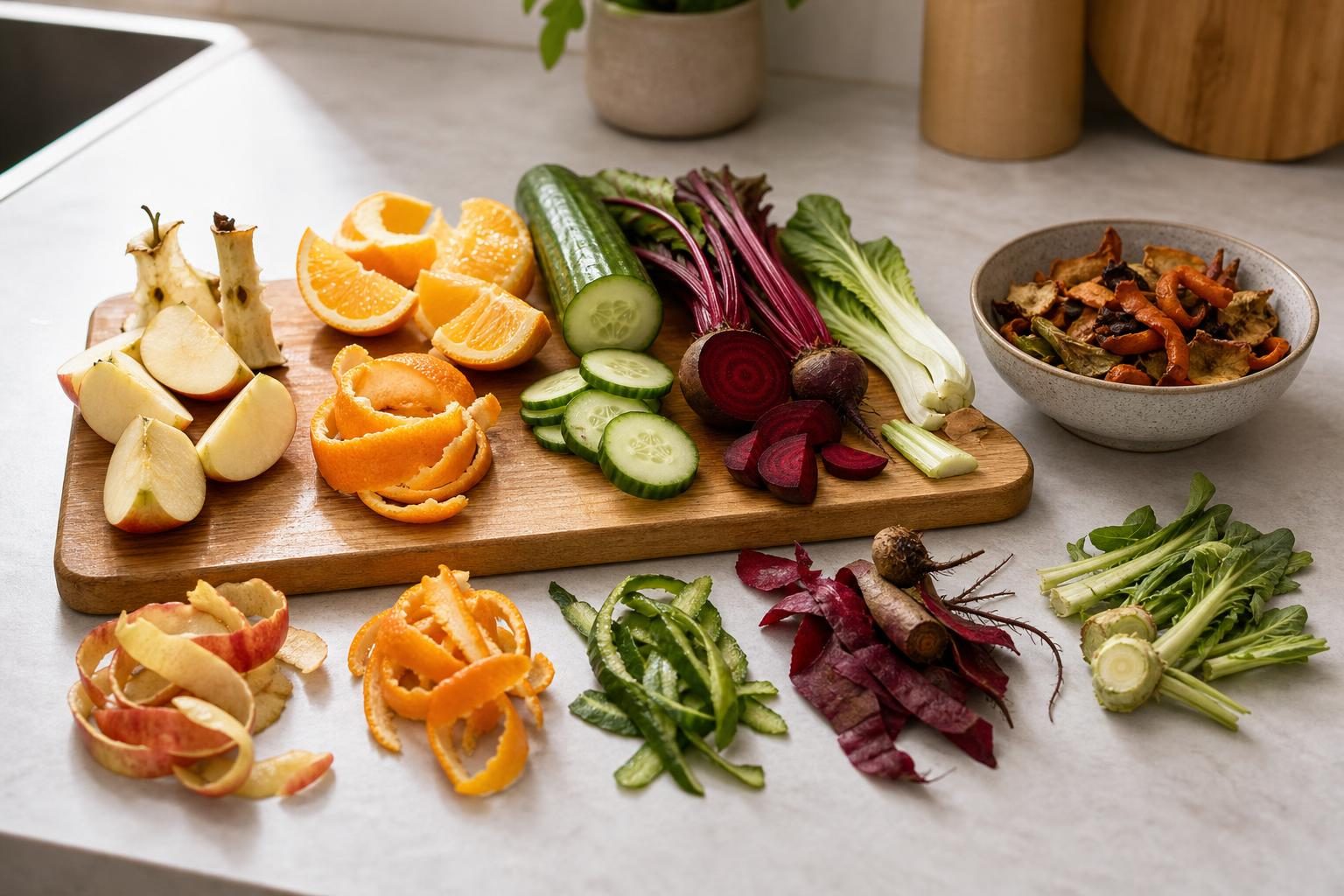
Researchers at King’s College London found that parts of fruits and vegetables many people throw away can contain a lot of fiber, according to BBC Newsround. Fiber is a plant nutrient that helps the digestive system, the body system that moves food through the stomach and intestines. The researchers hope more people will try eating more of the whole fruit or vegetable when it is safe to do so.
The team studied 12 raw fruits and vegetables. They included beetroot, broccoli, butternut squash, pineapple, watermelon and kiwi fruit. The researchers measured fiber in parts such as stalks, rinds, peels, skins, seeds and cores. They found that these outer or tougher parts often had more fiber than the parts people usually eat.
That happens because fiber is often more concentrated in the outer layers of plants. For example, the study found that watermelon rind had 2.10 grams of fiber in each 100 grams of rind, which the article says is about the same as a slice of wholemeal bread. Butternut squash skin and seeds had 9.25 grams of fiber per 100 grams, nearly as much as a bowl of bran flakes. Pineapple skin and core had five times more fiber than pineapple flesh.
This matters because many children and adults do not get the recommended amount of fiber. Fiber helps keep digestion moving, which makes it easier to go to the bathroom regularly. It also helps keep the gut, meaning the stomach and intestines, healthy. Because fiber can slow down how quickly the stomach empties, it may help a person feel full for longer.
The idea is not to eat every scrap without thinking. Some plant parts are waste for a reason. The British Nutrition Foundation says people should avoid green potatoes and rhubarb leaves because they contain toxic compounds, meaning substances that can be poisonous. The BBC article also says tough stalks and seeds may not be suitable for very young children. Food should be washed properly before anyone eats peels or skins.
King’s College London has tried putting the idea into real meals. The university tested 29 root-to-tip recipes, meaning recipes that use more parts of the plant instead of only the most familiar parts. The meals were offered in the university canteen, which is a cafeteria. One example was banana skin curry. That may sound strange, but the point was to test whether food that is often wasted could become part of normal cooking.
A dietitian, which is a food and health expert, told BBC Newsround that the idea could help people get more fiber. She suggested starting with small changes, such as slicing ripe kiwi fruit thinly so the skin is less noticeable, blending it into smoothies, or baking root vegetable peelings with a little oil to make crisps. Pumpkin can also be roasted with the skin on until the skin becomes soft.
The story connects to science class because it is about plant structures and nutrition. It also connects to social studies and family life because food waste is about habits, money, culture and what people are willing to try. A school cafeteria or a home kitchen cannot change overnight, and taste still matters. But the study asks a simple question with a complicated answer: when people throw away peels, stalks and rinds, are they also throwing away useful food?
Written from reporting by BBC Newsround, “Would you eat vegetable scraps?”.
Discussion questions
- Should schools try serving more foods that use peels, stalks and rinds, or should they focus first on foods students already know they will eat? Defend your position.
- What would be the fairest way to introduce unfamiliar foods like kiwi skin or vegetable peel crisps to a community with many different food traditions?
- The study focuses on fiber, but what other evidence would you want before deciding that eating more scraps is a good public health idea?