
Free activities › Middle school
Fossil Fuel Emissions May Dip, but Climate Goal Still Looms
A new report says coal, oil, and gas pollution may fall slightly in 2026, but the bigger climate picture is still troubling.
Print it — all four files
The student packet has no answers in it. The teacher copy is the same pages plus a note on each question and the answer keys. Both languages carry the same story, the same picture and the same vocabulary.
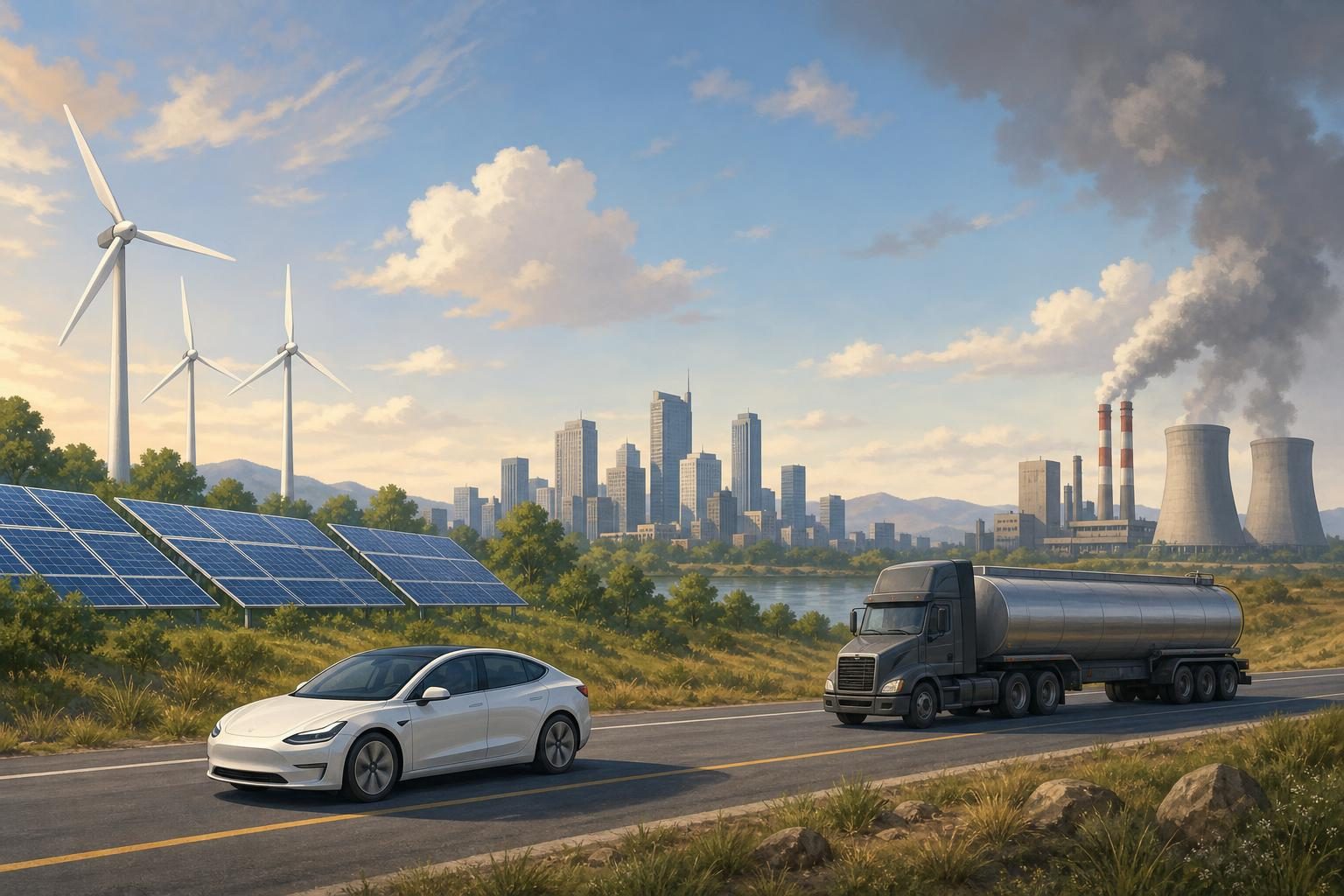
Global carbon dioxide emissions from fossil fuels are projected to fall slightly in 2026, according to reporting by Live Science on a new Global Carbon Budget report. Fossil fuels are coal, oil, and gas, which formed from ancient plants and animals and release carbon dioxide when people burn them for energy. The report says those fossil-fuel emissions may drop by 0.4% this year. That is a small change, but it would be the first yearly drop since the coronavirus pandemic in 2020.
Carbon dioxide, or CO2, is a greenhouse gas, meaning it traps heat in Earth’s atmosphere the way a blanket traps warmth. More greenhouse gases can raise average temperatures, change weather patterns, and raise sea levels. The new report projects 38.2 billion metric tons of CO2 emissions from fossil fuels this year. A metric ton is a unit of mass a little larger than a U.S. ton.
The drop does not mean the climate problem is solved. Scientists in the report say the decline is partly linked to more solar and wind power, as well as more electric vehicles. But it is also linked to higher energy prices and reduced fuel availability connected to the Iran conflict. In other words, some of the decrease happened because people and businesses used less fuel when it became harder or more expensive to get.
That difference matters. A lasting climate solution would mean people can get the energy they need while releasing much less CO2. A temporary drop caused by a crisis may not last. One scientist quoted in the Live Science report said emissions could rebound, or rise again, if the conflict ends and fuel demand grows.
The report also shows how complicated global emissions are. In 40 countries, emissions have fallen over the past decade while their economies kept growing. That group includes the United States, Japan, the United Kingdom, Australia, New Zealand, South Korea, and many countries in the European Union. This matters because it suggests that some places have found ways to make goods, run transportation, and power homes while burning less fossil fuel.
The biggest countries do not all follow the same path. The report projects fossil-fuel CO2 emissions to fall by 0.9% in China, 1.3% in the United States, 1.5% in the European Union, and 1% in Japan. India’s fossil-fuel emissions are projected to grow by 4.4%. That does not mean one number tells the whole story. Countries have different populations, energy needs, industries, and levels of wealth.
Energy demand is still rising around the world. Demand means how much people want or need to use something. The report says about two-thirds of the extra demand for energy is being met by solar power, wind power, and electric vehicles. That is a sign that cleaner technology is starting to change the math. But the report also says clean energy is not yet growing fast enough to make fossil-fuel emissions fall steadily year after year.
There is one more important catch. Fossil fuels are only part of total CO2 emissions. When the report counts other sources, total global CO2 emissions are projected to rise slightly, from 42.8 billion metric tons last year to a record 43.3 billion metric tons this year. The report points to human-caused peat fires, deforestation, and forest fires linked to dry El Niño conditions. Peat is partly decayed plant material that stores carbon, and deforestation means clearing forests.
The report is being presented this week at COP31, a United Nations climate meeting where countries discuss how to respond to climate change. For anyone studying Earth science, the carbon cycle, weather, or economics, the main lesson is that one number can tell two stories at once. A small fossil-fuel drop can be real progress. It can also be too small, too temporary, and outweighed by other sources of pollution.
Written from reporting by Live Science, “Iran war helps fuel global drop in fossil fuel emissions — but there’s a catch”.
Discussion questions
- Should a country count a temporary emissions drop caused by high fuel prices as climate progress? Defend your answer.
- If energy demand keeps rising, what should governments and communities focus on first: using less energy or building more clean energy? Explain the trade-off.
- What important information is missing if someone only looks at one country’s emissions percentage for one year?