
Free activities › Middle school
Should Youth Sports Sidelines Be Smoke-Free?
A young player’s campaign raises a bigger question about health, fairness, and rules at outdoor games.
Print it — all four files
The student packet has no answers in it. The teacher copy is the same pages plus a note on each question and the answer keys. Both languages carry the same story, the same picture and the same vocabulary.
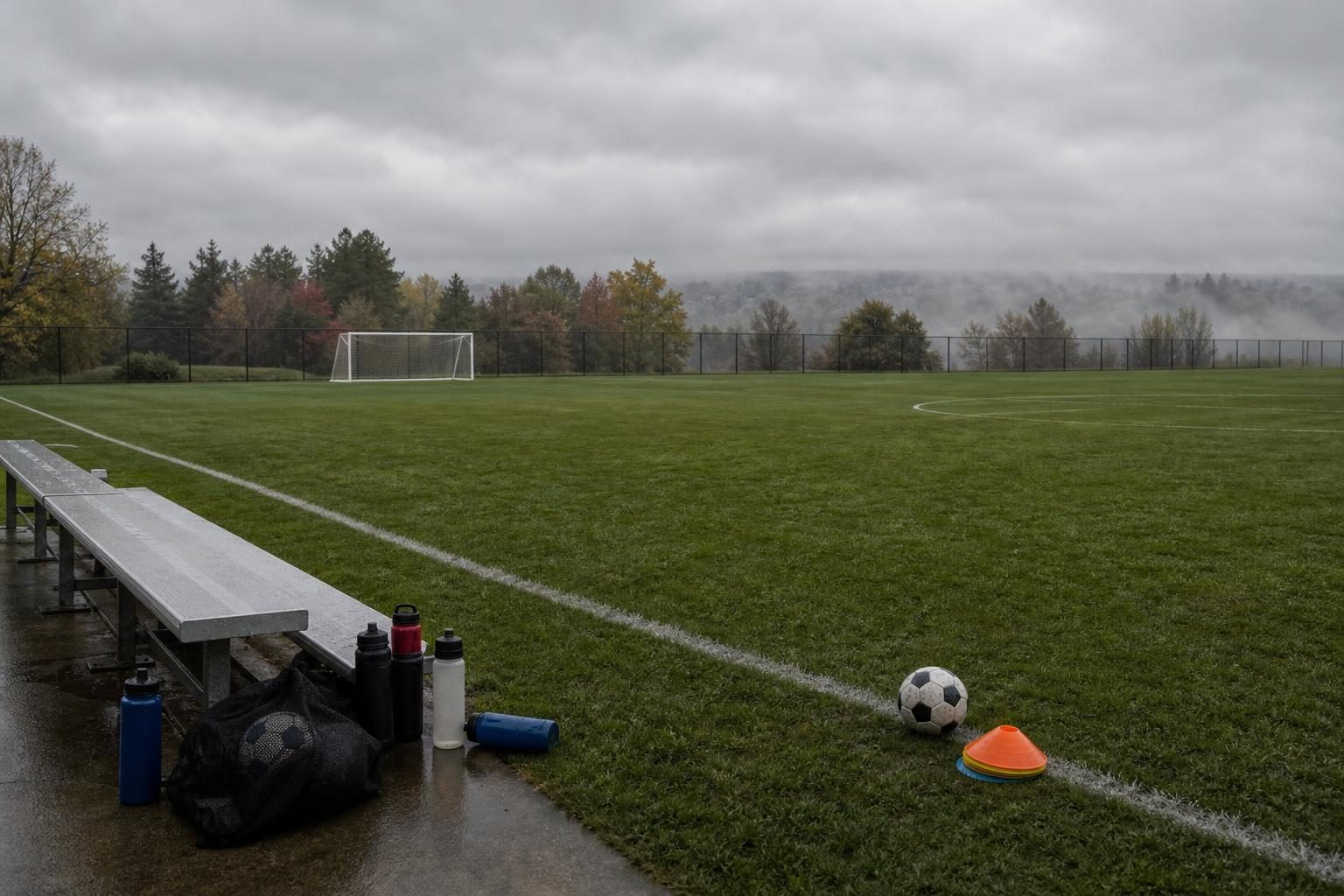
An 11-year-old football player in England is asking leaders to ban smoking and vaping near children’s sports games, according to BBC Newsround. Football is the sport many Americans call soccer. The player, Gracie, has asthma, a common long-term lung condition that can make airways swollen and narrow. She says smoke on the sidelines can make her chest hurt and force her to stop playing.
The story matters because it is not only about one team. It is about how communities decide what adults may do in shared spaces when children are nearby. Smoking is already banned inside many public places in the United Kingdom. But outdoor youth sports fields are different. In England, Scotland, and Northern Ireland, adults are generally allowed to smoke outside. That means a person standing near a children’s game may be following the law, even if the smoke bothers players.
Secondhand smoke is smoke breathed in by people who are not smoking. A health expert from Asthma + Lung UK told BBC Newsround that children can take in more smoke quickly when they are running, because they breathe faster during exercise. Vaping means using an electronic device that heats liquid into an aerosol, or tiny particles in the air, that a person breathes in. The article focuses on both smoking and vaping because both can happen near a field where children are playing.
Some sports groups have tried to change behavior without making a new law. The Football Association of Wales banned smoking from the sidelines for small-sided and junior football in 2020 and added vaping in 2025. In England, some county football associations, including Cheshire FA where Gracie’s team is based, take part in a Smokefree Sidelines program. That kind of program asks clubs and local councils to encourage adults not to smoke or vape near games. But it is mostly about education, not punishment. Coaches and clubs are not expected to challenge spectators directly if they refuse.
The law is not the same across the United Kingdom. Wales already bans smoking at playgrounds, schools, and hospital grounds. England is considering rules for playgrounds and areas outside schools, according to a Department of Health and Social Care spokesperson quoted by BBC Newsround. Northern Ireland and Scotland have said they plan consultations, which are official efforts to ask people and experts what they think before changing a law. At the moment, though, there are no laws against smoking at children’s sports matches outside school grounds.
The hard part is deciding where one person’s freedom ends and another person’s health begins. Many laws about smoking are built on that question. Adults may argue that an outdoor space is open air, not an indoor room. Families may answer that children cannot easily move away during a game, especially if they are on the field, and that children with asthma may face a bigger risk than others.
It also shows how a local problem can become a civics question. In social studies, laws are often described as rules a community makes to solve shared problems. In health class, people learn that prevention can matter as much as treatment. This story sits at the meeting point of both subjects: a child wants to keep playing the sport she loves, and adults must decide whether polite requests are enough.
Written from reporting by BBC Newsround, “How do you feel about people smoking on the sidelines when you're playing sport?”.
Discussion questions
- Should outdoor youth sports fields have stricter rules than other outdoor public places? Defend your answer.
- Is an education campaign enough, or should there be an enforceable ban on smoking and vaping near children’s games?
- If a town in the United States considered a similar rule, what information or voices should leaders gather before deciding?