
Free activities › Middle school
Serbia’s Student-Backed Movement Wins a Major Election
After two years of protests, a youth-led opposition movement defeated a leader who had held power for 14 years.
Print it — all four files
The student packet has no answers in it. The teacher copy is the same pages plus a note on each question and the answer keys. Both languages carry the same story, the same picture and the same vocabulary.
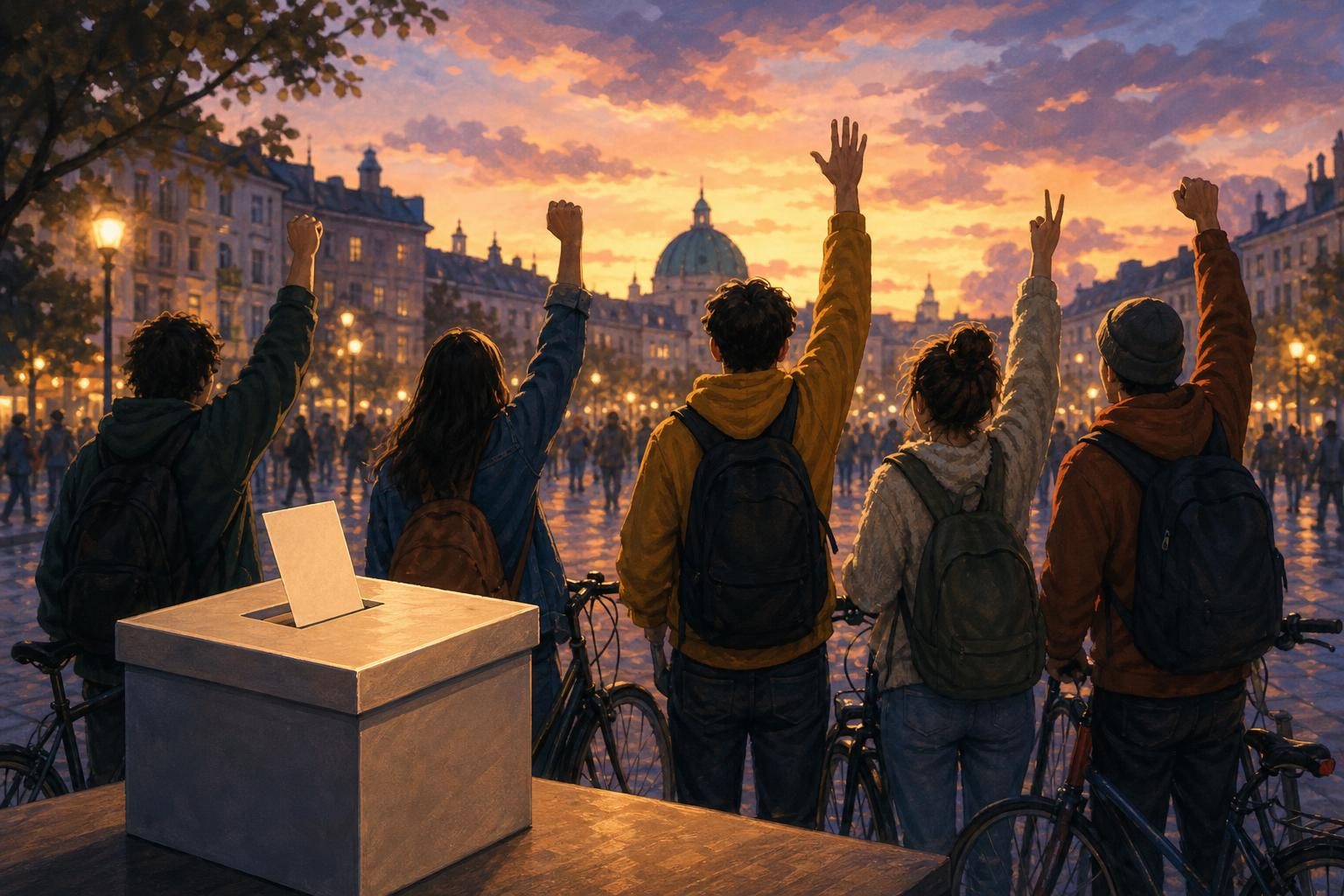
A student-backed movement in Serbia won a major parliamentary election on Sunday, according to Associated Press reporting published by PBS NewsHour. Serbia’s Parliament is the national lawmaking group, similar in purpose to the U.S. Congress. Aleksandar Vucic, who had led the country or his party for 14 years, conceded defeat soon after polls closed. His party projected that the Students’ List would win between 135 and 140 seats in the 250-member Parliament, while his own party would win about 105.
The result matters because it shows how young people can shape politics even before many of them are the main candidates. The movement was led by university students, but its election list included experts, athletes, farmers and artists instead of the students themselves. Their message was that Serbia needed to rebuild trust in democracy, which means government by the people through fair elections and protected rights.
Serbia is a country in southeastern Europe. Vucic had been a powerful figure there for years. The AP described him as a strongman leader, meaning a leader who keeps tight control over government and public life. His critics accused his government of corruption, which means using public power for private gain, and of weakening democracy. Vucic and his supporters argued that he was a capable leader in uncertain times.
The student movement grew after a deadly train station canopy collapse in the city of Novi Sad in 2024. Protesters blamed the disaster on corruption and poor oversight during renovation work. That tragedy became a turning point. For two years, young activists protested, organized and tried to reach people beyond big cities.
Their campaign used methods that are easy to picture. They cycled and walked through the country to speak with voters in rural areas, where Vucic had often been strong. That part of the story connects to what middle schoolers study in civics and history: movements often have to do more than be loud in one place. They have to persuade people who may not already agree with them.
The election also had signs of tension. Police in anti-riot gear were seen in parts of Belgrade, the capital. Large crowds celebrated after Vucic conceded. Some supporters of the winning side drove through the city honking horns and singing. The AP reported that turnout could reach around 70 percent, a level Serbia had not seen since 2000. Turnout means the share of eligible voters who actually cast ballots.
This story is not only about Serbia. It raises bigger questions about power, protest and elections. In a democracy, protests can bring attention to a problem, but elections decide who gets legal authority to govern. The Serbian students helped connect those two tools. They turned anger over a disaster into a campaign about how the country should be run.
There are still questions ahead. Winning seats is not the same as solving problems. A movement built from many different kinds of people may have to agree on plans for jobs, schools, courts and public safety. It will also face pressure from people who supported the old government. But the election shows that young people can be more than observers. They can change what adults think is politically possible.
Written from reporting by PBS NewsHour, “Serbia's strongman leader Vucic concedes defeat to student-led movement in seismic political shift”.
Discussion questions
- When is protest a useful tool for changing government, and when is voting more powerful?
- The Students' List used non-student candidates even though students led the movement. Was that a smart choice?
- What information would you still want before deciding whether this election will strengthen democracy in Serbia?