
Europe’s Heat Record Becomes a Worksite Problem
Record heat stress and drought are changing how crews plan transport, water systems, power production, and safety.
Print it — all four files
The student packet has no answers in it. The teacher copy is the same pages plus a note on each question and the answer keys. Both languages carry the same story, the same picture and the same vocabulary.
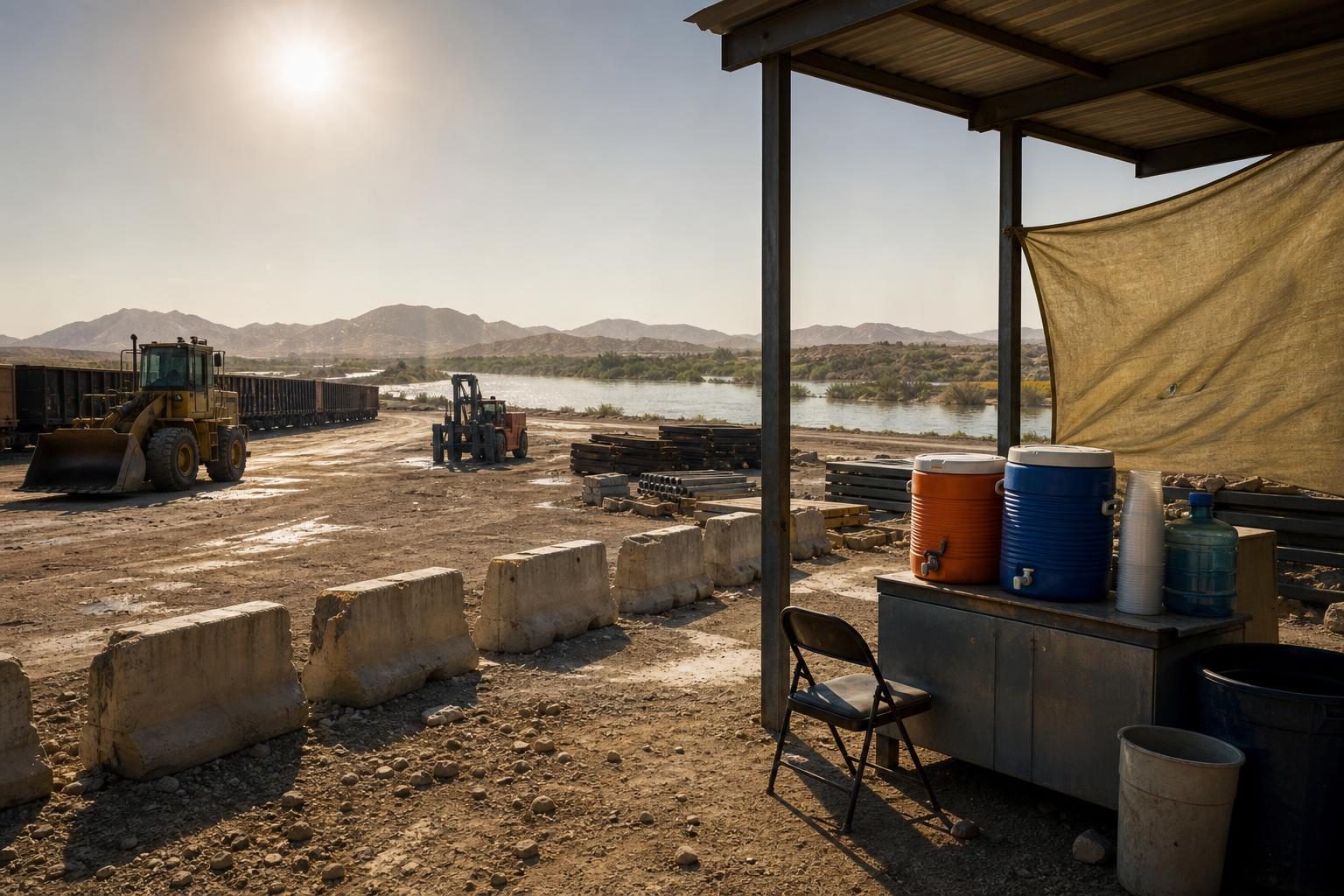
Europe just finished a summer that pushed heat from a weather issue into an operations issue for major industries. According to Phys.org, citing Copernicus, the European Union’s climate monitor, 52% of Europe was exposed this summer to “very strong” heat stress, meaning feels-like temperatures above 38°C, or 100°F. About 80% of the continent experienced “strong” heat stress, with feels-like temperatures above 32°C, or 90°F. Copernicus said Europe had its third-warmest summer on record, while western Europe had its hottest summer on record.
Heat stress means the body’s cooling system cannot keep up with heat, humidity, sun, and physical effort. The article describes symptoms ranging from dizziness and headaches to organ failure and death. A feels-like temperature is not just the air temperature; it reflects how conditions affect the human body. That matters on a jobsite because a worker’s risk is not based only on what a thermometer says. It is also shaped by workload, clothing, shade, airflow, surface heat, and how long the task takes.
For career and technical fields, the important point is that heat changes the job, not just the comfort level. A construction crew, road crew, farm crew, warehouse team, delivery operation, or maintenance department may have to think differently about scheduling, hydration, rest, protective clothing, equipment checks, and emergency response. Heat stress can turn ordinary tasks into higher-risk work. The trade skill is not only toughness; it is knowing when conditions have crossed from uncomfortable to unsafe.
The summer also affected transportation. Copernicus reported that dry conditions led to the lowest river flows in Europe since records began in 1992, disrupting freight transport. Freight is the movement of goods, often by truck, rail, ship, barge, or aircraft. Low rivers can affect barges and river ports because less water can mean less carrying capacity or delays. That creates work for dispatchers, logistics planners, dock crews, mechanics, warehouse supervisors, and drivers, who may have to adjust routes, loading plans, maintenance timing, and delivery expectations.
Water-related trades were also part of the story. By the end of August, drought affected almost half of Europe, according to the article. Drought is a long period of unusually dry conditions that reduces available water. The report says drought put pressure on irrigation, which is the controlled movement of water to crops. That connects directly to agricultural technicians, pump installers, equipment operators, and people who maintain pipes, valves, sensors, and control systems. When water is limited, the job becomes more technical: crews need accurate measurements, leak control, reliable pumps, and careful timing.
Energy work is another place where the heat and drought showed up. Phys.org reported pressure on nuclear reactor cooling and hydropower. Nuclear reactor cooling is the system that removes heat from a nuclear power plant so equipment stays within safe operating limits. Hydropower is electricity made by moving water through turbines. Both depend on water conditions, so low river flows can become a plant operations problem. The workers involved include plant operators, electricians, instrumentation technicians, mechanical maintenance crews, safety staff, and engineers who monitor temperature, flow, alarms, and backup systems.
This kind of event changes what employers may value in entry-level workers and apprentices. Technical reading matters because crews have to understand heat advisories, safety procedures, equipment manuals, sensor readouts, and work orders. Communication matters because a heat-related mistake may involve several crews, not one person. Documentation matters because maintenance logs, delivery records, irrigation schedules, and safety reports help supervisors make decisions. Math and measurement matter because temperature, water flow, load weight, pressure, and time all affect whether a system is operating safely.
The larger work lesson is that climate records are not only for scientists. A climate monitor collects and analyzes weather and climate data, but the results end up in dispatch offices, power plants, fields, loading docks, and safety meetings. Europe’s 2026 summer combined heat, drought, transport disruption, and pressure on energy and water systems. For technical careers, that combination shows why the person who can operate equipment, read conditions, follow procedure, and adapt a plan is becoming more valuable.
Written from reporting by Phys.org, “Europe's hottest summer caused record heat stress: Monitor”.
Discussion questions
- When heat creates both safety risks and schedule pressure, how should a supervisor balance getting work done with protecting workers?
- Which field in the article—freight, irrigation, nuclear cooling, or hydropower—seems most vulnerable to drought, and why?
- What technical skills would make a new hire more useful during extreme heat or drought conditions, and which are harder to teach on the job?