
Roadless Forest Rule Could Change Work in the Woods
A proposed rollback would reopen debates over roads, logging, water, wildlife, and the skilled trades that touch public forests.
Print it — all four files
The student packet has no answers in it. The teacher copy is the same pages plus a note on each question and the answer keys. Both languages carry the same story, the same picture and the same vocabulary.
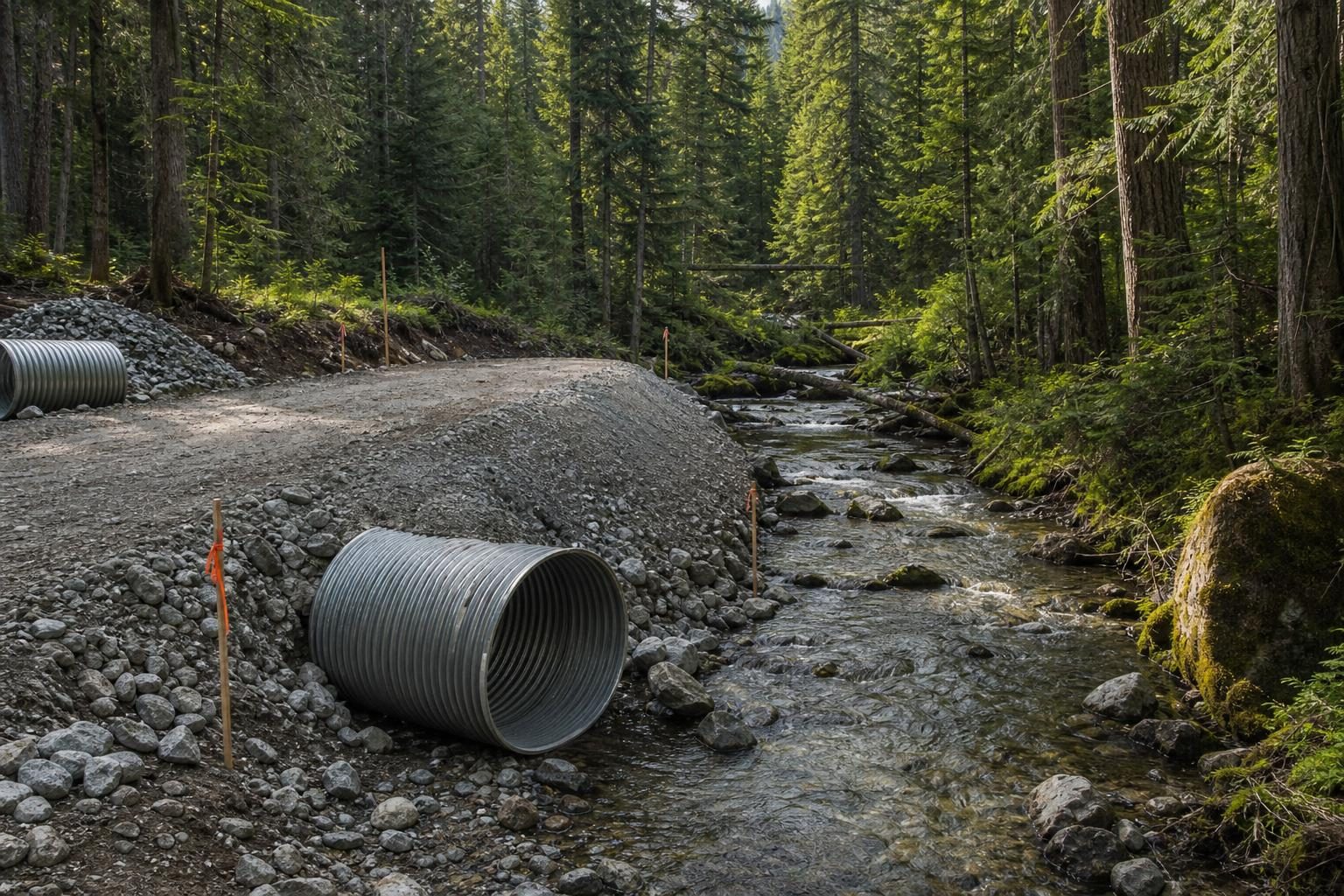
A federal proposal would remove long-running limits on new roads and commercial logging in many national forest areas that have been kept roadless for decades. According to Ars Technica, the Trump administration says ending the 2001 Roadless Rule would lift restrictions on road construction and timber harvest across nearly 59 million acres of national forest.
The Roadless Rule is a land-management policy that bars most new road construction, road maintenance, and commercial timber harvest in inventoried roadless areas, meaning forest lands officially identified as having few or no roads. These places are not the same as national parks or designated wilderness areas, but they often sit near them or connect to them. Idaho and Colorado have their own state-specific roadless rules, so the national rule works differently there.
For people training in construction, forestry, natural resources, water systems, or heavy equipment, this is not just an environmental story. It is also a story about how the work gets defined before anyone starts a machine. A road project in a national forest is not only grading dirt. It can involve access planning, erosion control, stream crossings, culverts, slope stability, material hauling, equipment staging, and long-term maintenance. A culvert is a pipe or box-like structure that lets water pass under a road; if it is undersized or poorly placed, it can block fish movement or push sediment into streams.
The administration’s argument is that the rule has slowed economic development. If the rollback goes forward, more areas could become available for timber operations and the roads needed to reach them. That could mean more work for survey crews, equipment operators, truck drivers, timber contractors, mechanics, and people who build and maintain drainage systems. It could also mean more permitting, inspection, and restoration work, because roads in forests do not stop affecting the site when the crew leaves.
The trade-off is that roads change a forest in ways that are difficult to undo. The Ars Technica article notes that the lower 48 states already have more than 4.2 million miles of public roads, while only about 5 percent of that region is inventoried roadless area or wilderness. Roads can bring access for logging, firefighting, recreation, and management. They can also carry invasive weeds on tires, add sediment to streams, split habitat into smaller pieces, and increase the chance that animals are hit by vehicles. The article also cites research finding that fires are more likely to start in areas with roads than in areas without them.
Water is one of the biggest job-site issues. National forests supply drinking water to millions of Americans, and roadless areas help protect watersheds, which are land areas that drain into the same river, lake, or water supply. Ars Technica reports that roadless areas protect watersheds supplying drinking water to 47 million Americans. If road building increases sediment in waterways, communities may face higher water purification costs. That connects forest decisions to water-treatment operators, civil technicians, utility managers, and maintenance crews far from the forest itself.
Wildlife work is also affected. Roads can change animal behavior because of traffic and noise, and the article says studies have found road noise can affect wildlife more than a mile away. Roadless areas provide habitat for species of conservation concern, meaning species whose long-term survival is at risk. Some roadless areas in Arizona contain habitat for many such species. In California, roadless areas include important habitat for the relictual slender salamander and the Mount Pinos lodgepole chipmunk, according to the article.
There is also a government-process piece. A 30-day public comment period will begin once the formal proposal is published in the Federal Register, the official daily record where federal agencies publish proposed rules, notices, and regulations. That means contractors, local governments, water utilities, recreation businesses, tribal governments, conservation groups, and ordinary residents can send comments before the rule is finalized. A separate effort in Congress would remove the Roadless Rule through an amendment to the Wildfire Prevention Act and prevent the U.S. Forest Service from bringing it back later.
One thing the article does not answer is how many jobs would be created, what kinds of jobs would be permanent, or who would pay for maintaining any new roads. That matters because a short-term road-building or logging contract is not the same as a stable career path. A serious workforce discussion has to separate real tasks from promised job counts.
The practical question is not whether roads are always good or always bad. The question is what job the road is supposed to do, what it will cost to build and maintain, what risks it adds to water and wildlife, and who is responsible when the project is finished. In the skilled trades, that is familiar ground: the plan, the site conditions, the materials, the maintenance schedule, and the consequences all matter.
Written from reporting by Ars Technica, “Dismantling the Roadless Rule threatens to disrupt wildlife and water in US”.
Discussion questions
- If a forest road could create local work but also increase water-treatment costs downstream, how should decision-makers weigh those costs and benefits?
- Who should have the strongest voice during the public comment period: local contractors, nearby residents, water utilities, scientists, recreation users, or someone else?
- What information is missing from this story that would help a CTE program judge whether the rollback would create good career opportunities?