
Tax Cut Study Shows How Price Changes Move Real Work
A German COVID-era VAT cut pushed some households to buy sooner, showing how policy can affect retail, auto sales, and accounting jobs.
Print it — all four files
The student packet has no answers in it. The teacher copy is the same pages plus a note on each question and the answer keys. Both languages carry the same story, the same picture and the same vocabulary.
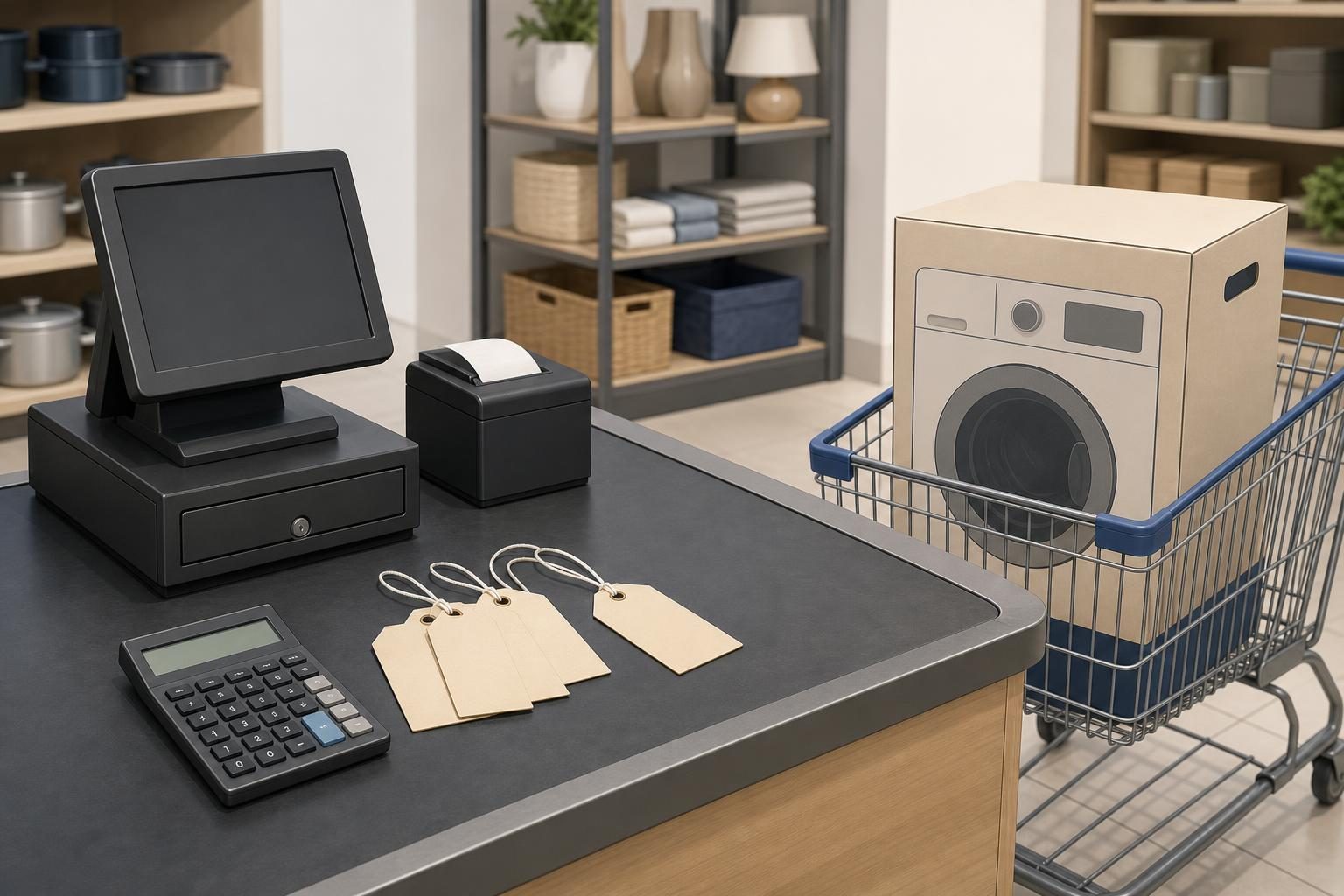
A new study of Germany’s 2020 COVID stimulus found that a temporary tax cut helped push people to buy more, especially bigger-ticket items, according to reporting by Phys.org on research published in the Review of Economic Studies. Germany lowered its value-added tax from 19% to 16% for half a year in summer 2020. A value-added tax, or VAT, is a tax on goods and services collected through the supply chain; for a shopper, it works much like a sales tax that affects the final price.
The researchers studied household surveys, actual retail purchase data, and an economic model. An economic model is a simplified mathematical version of the economy used to test how different people or businesses might react. The basic idea was simple: if a tax cut makes goods cheaper now, and everyone knows the tax will go back up later, some shoppers may decide to buy sooner rather than wait.
That matters beyond economics class because it changes the work inside stores, dealerships, accounting offices, and distribution businesses. A temporary tax change is not just a line in a government announcement. Someone has to update point-of-sale systems, which are the registers and software that calculate prices and taxes. Someone has to check invoices, revise price labels, explain the change to customers, and make sure the business is not overcharging or undercharging. If the change is temporary, the same work has to happen again when the old tax rate returns.
The study found the strongest effect for durable goods, which are products expected to last a long time, such as cars. Households that believed the tax cut was strongly passed through to consumer prices spent about 37% more on durable goods in the second half of 2020 than households that saw little or no price effect. Pass-through means the amount of a tax cut that actually shows up as a lower price for customers instead of being kept by the seller or lost in other costs.
The effect was smaller for medium-durability goods, such as books, where spending was about 10% higher for households that noticed strong price reductions. For short-lived everyday goods, such as food, the study did not find a significant effect. That difference makes sense on the job: people can move up the timing of a car purchase, an appliance purchase, or a furniture purchase, but most families cannot buy six months of fresh groceries just because the tax rate changed.
The researchers also found that households that knew the tax cut was temporary were more likely to plan major purchases. In a July 2020 survey, the difference was about 10 percentage points compared with households that did not know the cut would expire. A percentage point is the difference between two percentages; for example, moving from 40% to 50% is a 10 percentage point increase.
For workers in sales and customer service, that finding points to a real skill: explaining price changes clearly without overselling. If customers understand that a lower tax rate will end, they may make different choices. But the worker still has to be accurate about the price, the tax, the financing, the return policy, and the delivery schedule. In trades where trust matters, a confused explanation can turn into a complaint, a returned product, or a lost customer.
For accounting and office-support workers, the lesson is different. Tax rates affect purchase orders, receipts, refunds, inventory records, and monthly reports. If a customer buys an item under one tax rate and returns it after the rate changes, the business needs a correct procedure. If a vendor invoice uses the wrong rate, someone has to catch it. Accuracy becomes part of compliance, which means following tax rules and keeping records that can be checked later.
For managers, the study highlights pricing strategy. A business might choose to pass the full tax cut to customers, keep prices partly the same, or combine the tax change with a promotion. Each choice affects demand, profit margin, and staffing. Profit margin is the share of revenue left after costs. If more customers rush to buy durable goods during a temporary cut, a dealership or store may need more sales coverage, delivery scheduling, service technicians, or inventory planning. If the rush does not happen, the business may be stuck with extra stock.
The study’s model estimated that the VAT cut raised total consumption spending by 4.4% immediately after it began. Consumption spending means money households spend on goods and services. The strongest responses came from younger and middle-aged households with lower net wealth, along with price-conscious bargain hunters. Net wealth means what a household owns minus what it owes. The researchers reported that financial literacy, meaning knowledge about money and financial decisions, did not play a major role in who responded.
That is important for hiring and training because it suggests customers do not all react to a policy change in the same way. A strong entry-level worker in retail, auto sales, bookkeeping, or logistics does not need to be an economist. But that worker does need enough number sense to read a rate, calculate a final price, spot an error, and communicate what changed. When government policy moves a price, the first people who often have to make it work are not lawmakers. They are the workers at the counter, in the office, in the warehouse, and on the sales floor.
Written from reporting by Phys.org, “New study shows COVID value-added tax cut significantly boosted private consumption”.
Discussion questions
- If a temporary tax cut increases sales of expensive items, should a business pass the full savings to customers or keep part of it to protect profit margins? Defend your choice.
- Which job role would be under the most pressure during a temporary tax change: sales staff, accounting staff, managers, or inventory/logistics workers? Explain your reasoning.
- What information is missing from this study if a U.S. business owner wanted to use it to plan for a similar tax change?