
Ancient Tomb Found Beneath an Italian Mound
A 2,700-year-old Etruscan tomb is helping researchers learn about a people whose language is still partly mysterious.
Print it — all four files
The student packet has no answers in it. The teacher copy is the same pages plus a note on each question and the answer keys. Both languages carry the same story, the same picture and the same vocabulary.
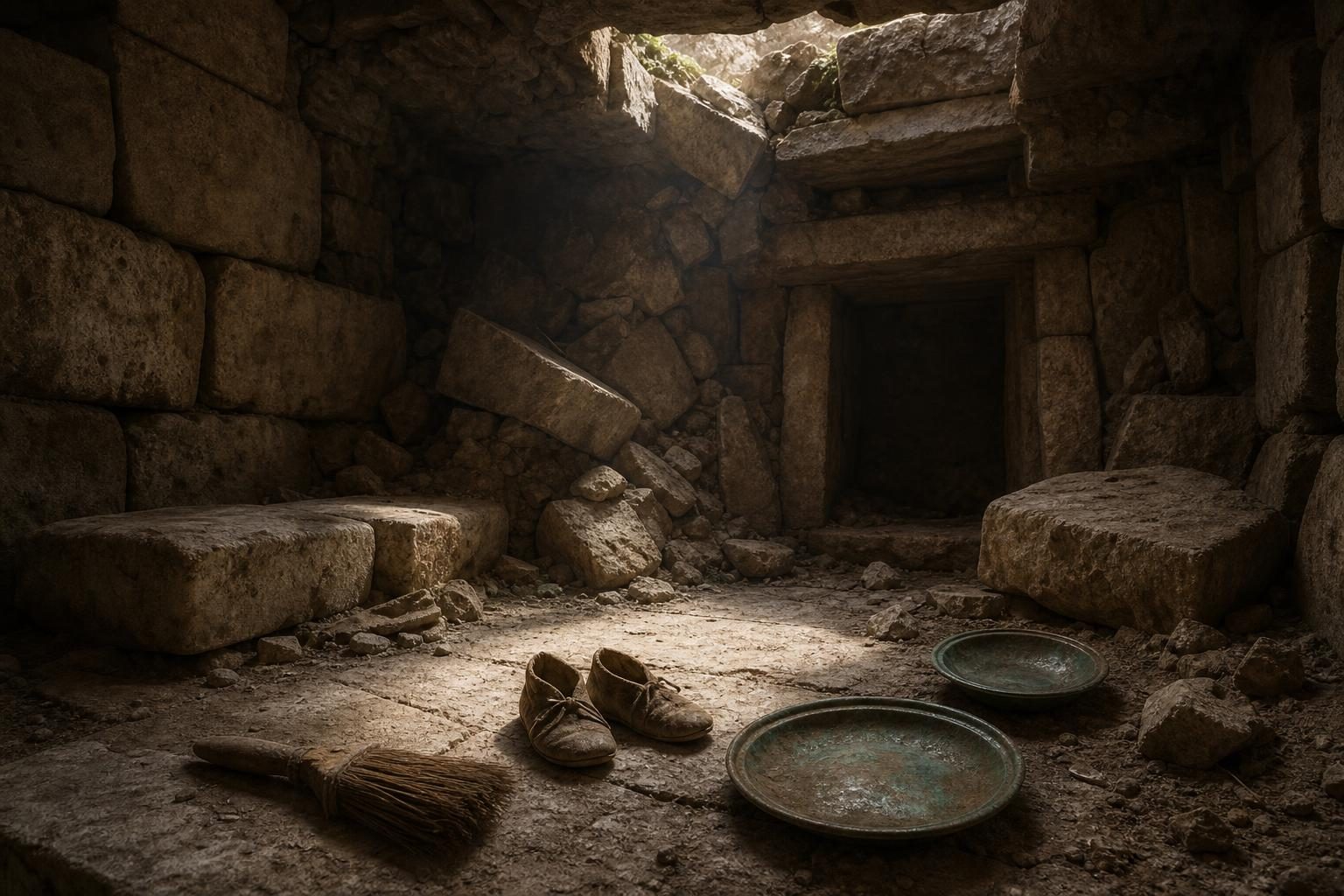
Archaeologists have found a huge stone tomb at Vulci, an ancient Etruscan town north of Rome. Live Science reports the discovery. Archaeologists are scientists who study old things people left behind. A tomb is a place made to hold a dead person.
This tomb is about 2,700 years old. That means it was built long before the Roman Empire became powerful. The Etruscans were an Indigenous people who ruled parts of central Italy for centuries. Today, their language is only partly understood. So objects from their towns can tell stories that words cannot.
The tomb is nicknamed the Tomb of the Stone Chamber. A chamber is a room. Workers uncovered walls from three burial rooms. The roofs had fallen in long ago. Under the fallen pieces, many objects were still waiting.
Some were everyday-looking things that were not everyday at all. The team found jewelry, clothing, and a rare pair of women’s shoes. They also found gold objects, bronze plates, weapons, and parts of a chariot. A chariot is a small cart pulled by horses. In one side room, they found a nearly complete banquet set. A banquet is a big special meal.
Imagine standing there as dirt is brushed away. A shoe appears first. Then a plate. Then another object in almost the same place where someone left it centuries ago. The room would be quiet. Each small find would make the past feel closer.
The discovery also solved an old puzzle. In 1889, a French archaeologist named Stéphane Gsell found the round edge of a large burial mound at Vulci. A mound is a hill built over a tomb. But he did not find the tomb before his dig ended. Now the Return to Vulci project says it has found the chamber inside that mound.
The tomb had been entered by robbers many times over the centuries. Still, many objects survived. That matters because archaeologists ask what the objects can teach, not just whether they are pretty. The mix of objects suggests an important person was buried there.
The site has been covered again to protect it. Research is expected to continue in 2027. For now, the tomb is a reminder that history can wait underground for a very long time. When it is found carefully, it can add missing pieces to a people’s story.
Written from reporting by Live Science, “Archaeologists discover 'tomb of the very highest rank' in 2,700-year-old Etruscan cemetery”.
Discussion questions
- Should archaeologists show discoveries like this to the public quickly, or keep them covered until more research is done? Defend your choice.
- Which object from the tomb would teach the most about Etruscan life: the shoes, the banquet set, or the chariot parts? Explain your reasoning.
- When a language is only partly understood, how can objects help tell history? What might objects still fail to explain?