
Free activities › Middle school
New Canada Tariffs Could Raise Prices in the U.S.
A trade fight between close neighbors may affect goods from hockey sticks to farm products.
Print it — all four files
The student packet has no answers in it. The teacher copy is the same pages plus a note on each question and the answer keys. Both languages carry the same story, the same picture and the same vocabulary.
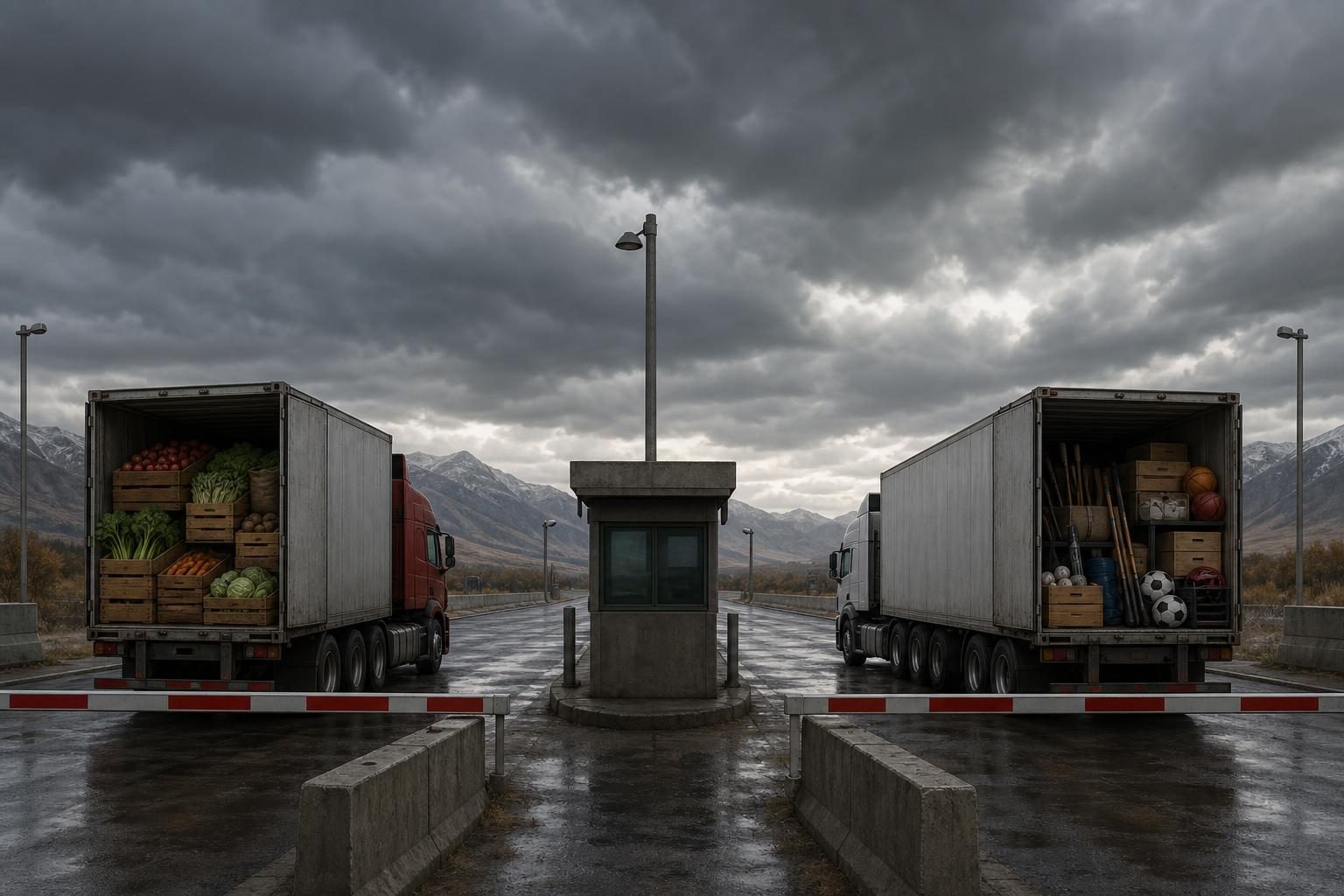
New 50% U.S. tariffs on many Canadian goods went into effect Saturday after last-minute trade talks failed, according to reporting by the Associated Press published by PBS NewsHour. A tariff is a tax on an imported good, meaning something brought into one country from another. These new taxes are expected to affect about 5% of Canada’s yearly exports to the United States, or about $20 billion in goods.
The products named by the Trump administration include hockey sticks, wine, cement, honey, seeds, farm products, some makeup, perfumes, clothing, jewelry, furniture, cameras, and fabric. Canada sells most of its exported goods to the United States; last year, 72% of Canada’s goods exports went south across the border. That makes the U.S. market especially important for Canadian businesses and workers.
Canada’s prime minister, Mark Carney, said Canada will answer with “dollar for dollar” retaliatory measures starting Sept. 8. Retaliatory measures are actions taken in response to another country’s action. Canada’s planned tariffs would target U.S. goods including steel, dairy, appliances, farm equipment, pulp and paper, and electronics. That means both countries may tax more goods coming from the other side of the border.
This matters because tariffs are usually paid first by importers, the businesses that buy goods from other countries. But businesses often pass some of that cost to shoppers by raising prices. Experts quoted in the article warned that higher tariffs can affect many industries and households. For someone in middle school, this can show up in the price of sports gear, food, clothing, or other items families buy.
The fight also matters because the United States and Canada have long been close trade partners. Trade is the buying and selling of goods and services, and international trade connects farms, factories, stores, and families across borders. When countries raise tariffs on each other, it can become a trade war, a cycle in which each side adds more barriers and costs. The article says no further talks are currently scheduled.
The new tariffs also raise questions in government class. President Trump used Section 338 of the Tariff Act of 1930, an old law from the Great Depression, the worldwide economic disaster of the 1930s. That section allows a president to put tariffs as high as 50% on imports from countries accused of treating U.S. businesses unfairly. The AP reports that this part of the law had not been used before in this specific way to raise tariffs, so courts may be asked to decide whether the move is legal.
Another important part is the U.S.-Mexico-Canada Agreement, a trade pact that sets rules for trade among the three countries. Some goods now facing the 50% tariff had been protected under that agreement. That could make businesses wonder how reliable trade rules are when governments disagree. The bigger question is not only whether one side can win a tariff fight. It is who pays the cost while the fight continues.
Written from reporting by PBS NewsHour, “What to know about Trump's 50% tariffs on Canadian goods that just went into effect”.
Discussion questions
- When a country uses tariffs to pressure another country, what benefits might leaders hope for, and what costs might ordinary families and businesses face?
- Should presidents have broad power to raise tariffs quickly, or should Congress and courts have a larger role before major trade changes happen?
- If two close trading partners enter a trade war, what kinds of information would you want before deciding which side made the better choice?