
Free activities › Middle school
U.S. and Canada Clash Over Tariffs
A fight over taxes on traded goods could affect businesses, workers, and prices on both sides of the border.
Print it — all four files
The student packet has no answers in it. The teacher copy is the same pages plus a note on each question and the answer keys. Both languages carry the same story, the same picture and the same vocabulary.
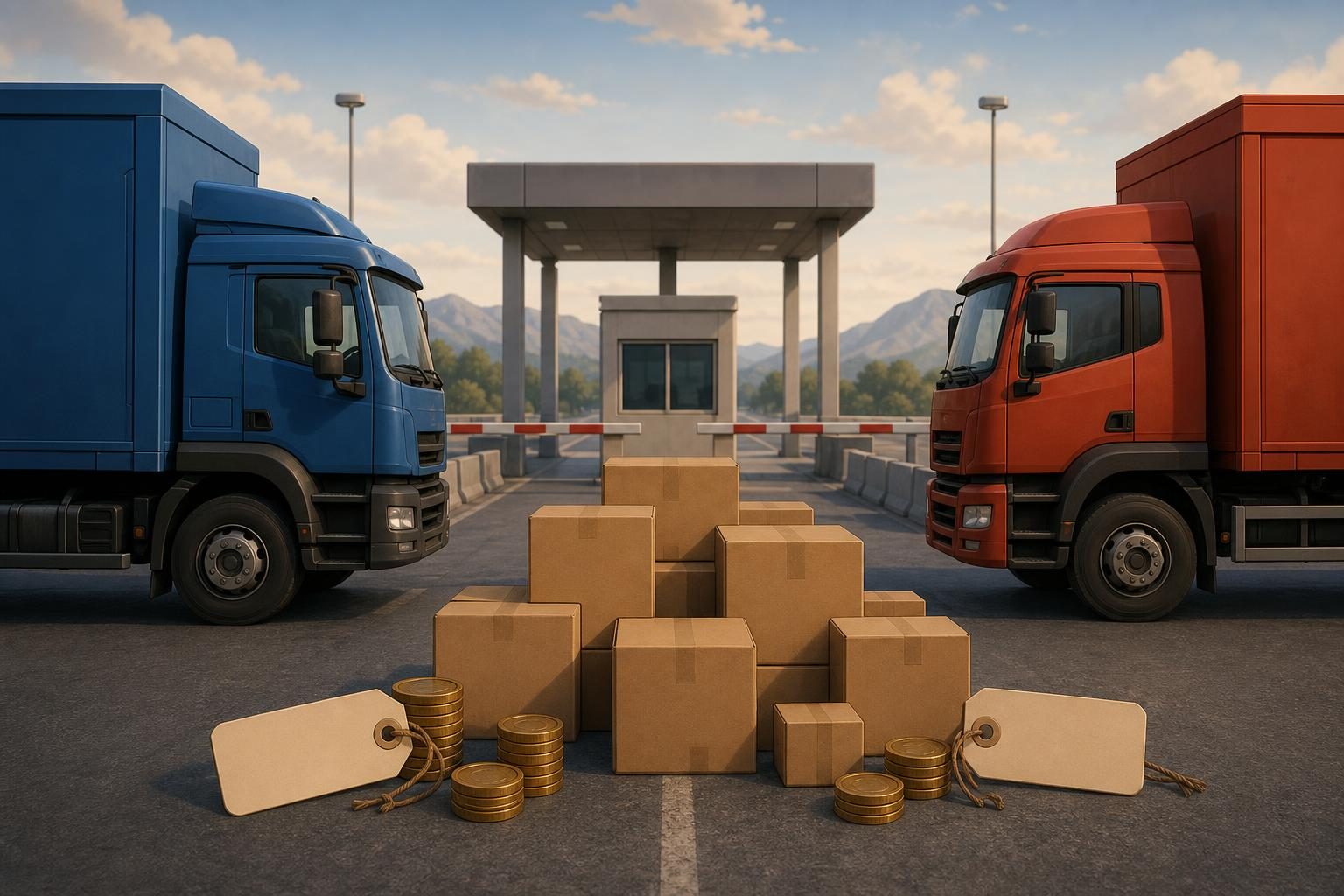
Canada announced that it will put new or higher tariffs on many goods from the United States, according to reporting by PBS NewsHour. A tariff is a tax on goods brought in from another country, and it can make those goods cost more. Canada’s move is a response to tariffs the United States recently placed on Canadian goods.
Starting September 8, Canada plans to impose or raise tariffs ranging from 15% to 50%. The tariffs will affect $27 billion worth of imports, which are goods brought into a country from somewhere else. More than 700 U.S. products are on the list. They include steel, aluminum, household appliances, farming equipment, paper products, and electronics.
The United States and Canada are close neighbors and major trading partners. Trade means buying and selling goods and services, often across borders. The PBS report said about $2.5 billion in goods crosses the U.S.-Canada border each day. That number helps show why a trade fight between the two countries matters beyond government offices. It can reach factories, stores, farms, and homes.
The dispute began after the Trump administration placed 50% tariffs on about $20 billion worth of Canadian imports. President Trump has also threatened more tariffs next year on steel and autos. Canada’s new tariffs are meant as retaliation, which means answering one action with a similar action. In a trade dispute, retaliation can put pressure on the other country, but it can also raise costs for people and businesses in both places.
This matters to someone in middle school because trade is part of everyday life, even when it is easy to miss. A refrigerator, a laptop, a family car, a school notebook, or equipment used on a farm may include parts or materials that crossed a border. If a tariff raises the cost of making or buying those goods, a company may charge more, earn less, or delay a project. The PBS report gave the example of a Michigan furniture business owner who said higher costs had already hurt his company’s profits.
The story also connects to geography. The U.S. and Canada share a long border, and some states trade heavily with Canada because they are close to it. Michigan, which borders Canada, was named in the report as one place already feeling the effects. A border is not just a line on a map. It is also a place where trucks, trains, ships, workers, and products move.
The disagreement includes politics, too. President Trump has argued that the U.S. trade deficit with Canada is a problem. A trade deficit means a country buys more from another country than it sells to that country. The report said the U.S. trade deficit with Canada was nearly $50 billion last year. Other officials have argued that the affected imports are only a small part of the overall U.S. economy.
That is the hard part about tariffs. Supporters may say they protect workers or push another country to change its behavior. Critics may say they raise prices and hurt businesses that depend on trade. In this case, the two countries are allies, which means they usually cooperate. But even allies can argue when money, jobs, and national interests are involved.
Written from reporting by PBS NewsHour, “Canada retaliates with tariffs against U.S. as relations deteriorate”.
Discussion questions
- When two friendly countries disagree over trade, is it better to respond strongly or try to avoid making the conflict bigger? Defend your answer.
- Who is most likely to feel the effects of tariffs first: government leaders, business owners, workers, or families buying goods? Explain your reasoning.
- What information would you want before deciding whether these tariffs are a good policy?