
Free activities › Middle school
White House press fight raises questions about access
A dispute over which reporters may cover the president became a test of press freedom and public information.
Print it — all four files
The student packet has no answers in it. The teacher copy is the same pages plus a note on each question and the answer keys. Both languages carry the same story, the same picture and the same vocabulary.
Three news organizations sued the Trump administration after they were banned from White House grounds, according to reporting by PBS NewsHour. CNN, MS NOW, and Politico said the White House took away their reporters’ credentials, which are official passes that allow journalists to enter and report from certain government spaces. The outlets said the action happened because the administration objected to their reporting.
The dispute quickly affected how the public saw the president’s work. CNN had been scheduled to serve in the rotating White House TV press pool on Monday. A press pool is a small group of reporters, photographers, and camera crews that covers events when there is not enough room for every news organization. The pool shares its video, sound, notes, and photos with many other newsrooms. Instead of replacing CNN, the TV pool did not send another crew to cover President Trump’s trip to New York for the United Nations General Assembly, a meeting where leaders from many countries gather.
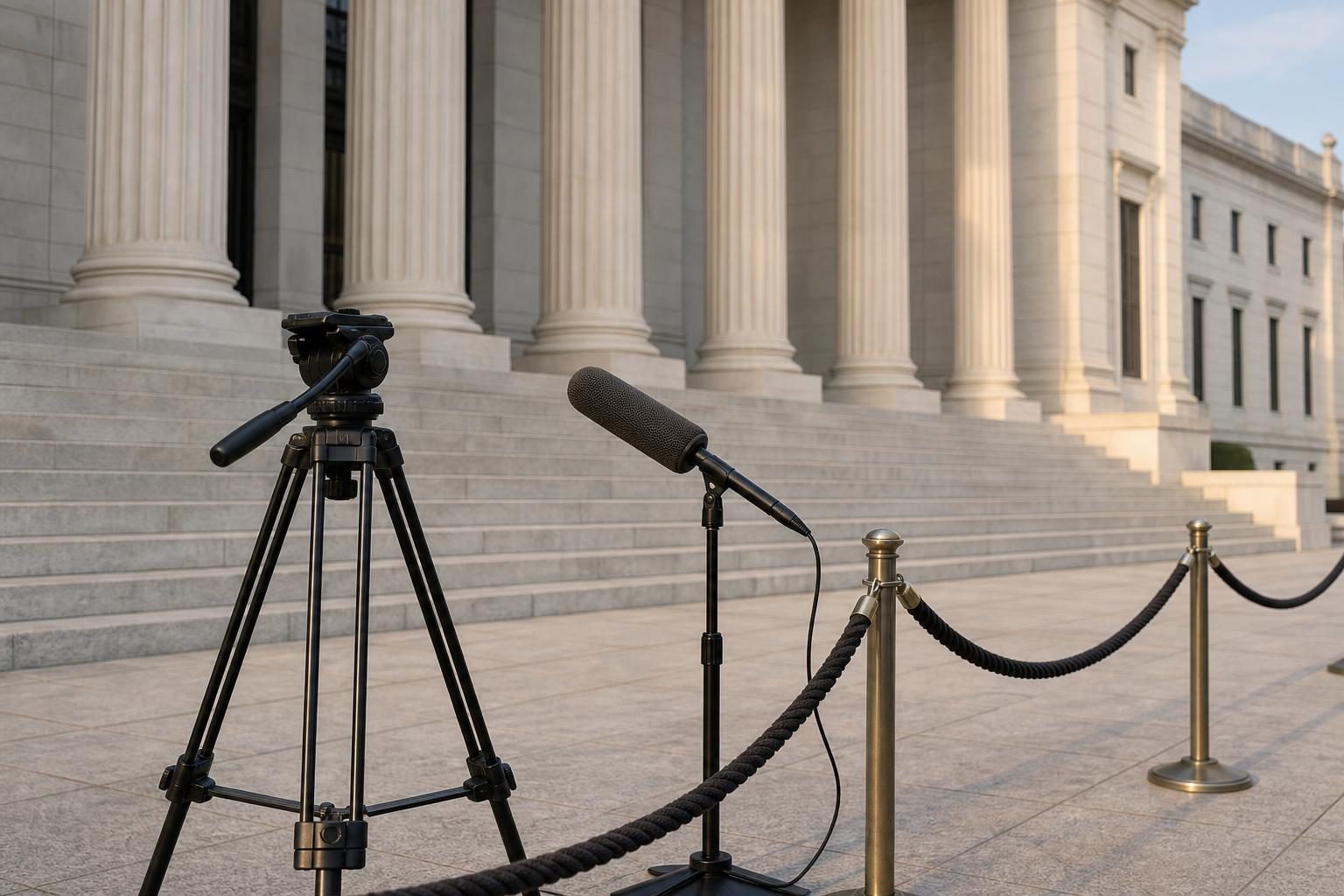
PBS NewsHour reported that, for the first time in modern White House press coverage, no TV camera from the pool traveled with the president that day. At one event, the White House used its own camera. But PBS reported that the setup did not include the usual boom microphone, a long microphone used to pick up clear sound from a distance. That meant reporters could not clearly hear what the president was saying at the event.
The three news organizations are asking a court for a temporary restraining order. That is a short-term court order that can stop an action while a judge studies the larger case. They want their White House access restored. PBS reported that a remote court hearing was scheduled for Wednesday.
The case matters because it connects to the First Amendment, the part of the U.S. Constitution that protects freedom of speech and freedom of the press. In social studies, the First Amendment is often discussed as a limit on government power. The idea is not that reporters get special treatment because they are famous or important. The idea is that the public needs information about what the government is doing.
The White House says it does not have to welcome every reporter or news outlet. Space is limited, and the president’s schedule can involve small rooms, airplanes, and secure areas. The White House also says some coverage is unfair or false. President Trump repeated Monday that he feels obligated not to let what he calls fake news into the White House.
But the news organizations argue that the government cannot punish them for coverage it dislikes. That is the central question in the case: where is the line between managing access and punishing a point of view? A viewpoint is a person’s or group’s position on an issue. If the government can remove access because it dislikes a viewpoint, future leaders could use the same power against different outlets for different reasons.
This also matters outside Washington. Local newspapers, TV stations, and websites often rely on pool reports when they cannot send their own staff to cover the president. If pool coverage is limited or replaced by government-produced video, people may get less independent information. Independent does not mean perfect or free from mistakes. It means the information is gathered by people who are not working for the government they are covering.
For someone in middle school, this story connects to questions already studied in class: How should the Constitution limit power? How can citizens check whether information is reliable? And when public officials say coverage is unfair, who should decide what access the press gets?
Written from reporting by PBS NewsHour, “Press pool declines to cover Trump in protest of his ban on news outlets”.
Discussion questions
- Should a government be allowed to remove a news organization’s access if it believes the coverage is unfair? Defend your answer and explain what limits, if any, should apply.
- If the public can still see government-produced video, why might independent press coverage still matter?
- How could the rules for a press pool be designed to be fair when space is limited and not every reporter can attend?